Math
The models on your child's math homework, from number lines and ten frames to tape diagrams and area models. What each one shows, which grade uses it, why schools teach it, and how to use it at home.
Counting & Number Sense
How-toExplainerWhat the research says, when children usually stop, and how to move from counting every finger to seeing groups of five.
How-toExplainerWhat number sense is, the order its parts grow in from age 3 to first grade, a two-minute check-in, and everyday ways to build it at home.
WorksheetsHow-toExplainerWhat subitizing is, the two kinds, what age children do each, and how to practice it at home, with free dot cards to print.
WorksheetsHow-toExplainerOne-to-one correspondence, the five counting principles, why a child can count to 20 but not say how many, and counting activities for preschool.
WorksheetsHow-toExplainerWhen kids learn it, how to teach it, counting by 10s, why kids stop at 29, and counting backwards, with free worksheets.
WorksheetsHow-toExplainerFilled, blank, and missing-number charts with answer keys, and five minutes a night of ways to use one with your child.
WorksheetsHow-toExplainerWhat the signs mean, a way to remember them that names them too, when children learn them, and how to teach comparing at the kitchen table.
WorksheetsHow-toExplainerWhat each pair means, when children learn it, and how to move a child from counting to find the answer to knowing it.
WorksheetsHow-toExplainerFree sheets for 0–9 and 10–20, what age children write numbers, how to teach each one, and why 3s and 7s come out backwards.
WorksheetsHow-toExplainerFirst to tenth in a table, how ordinal numbers differ from counting numbers, when children learn them, and five minutes of practice with toys already in the house.

WorksheetsHow-toGuideWhich board games build number sense and why, the best ones for ages 3 to 8, how to play so the numbers count, and a free number path game to print.
Addition & Subtraction
WorksheetsHow-toExplainerWhat each property says, with examples, how the commutative and associative properties differ, what grade uses them, and how to show them at home, with free turnaround facts worksheets.
How-toExplainerThe addition and subtraction strategies children learn to do in their heads from kindergarten to third grade, what each grade expects, what a number talk is, and how to run one at home in five minutes.
How-toExplainerWhat subtraction means, the names of its three parts, the four strategies children use within 20 in the order they learn them, and games to practice at home.
WorksheetsHow-toTen PDFs within 10, within 20, and within 100, four of them picture word problems, each with an answer key, which one each grade needs, and how to use a worksheet so it shows how your child thinks.
How-toExplainerWhat addition and subtraction mean, the strategies children learn from kindergarten to third grade in teaching order, and how to practice at home.
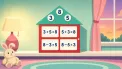
WorksheetsHow-toExplainerWhat a fact family is, how it helps a child subtract, what grade uses it, the fact family house and triangle, and how to teach it at home, with free worksheets.
WorksheetsHow-toExplainerThe addition strategies kids learn before memorizing facts: what each one is, which facts it solves, what grade it belongs to, and how to teach it at home, with free worksheets.
How-toExplainerWhat math facts and fact fluency are, when children should know their addition and subtraction facts, how they get from counting to knowing, and how to practice them a few minutes a day.
WorksheetsHow-toExplainerFilled and blank addition charts with answer keys, a subtraction chart, how to read an addition table, what its patterns show, and how to use one at home.
WorksheetsHow-toExplainerWhat the addition and subtraction facts are and how many there are, how kids learn the subtraction facts through the addition facts, and free flash cards sorted by strategy with each answer on the back.
ExplainerRegrouping is what many parents learned as carrying and borrowing: what it means, why schools changed the words, the grade it is taught in, and whether children still learn the old method.
WorksheetsHow-toAddition with regrouping, which many parents learned as carrying, for two- and three-digit numbers: the steps, the order to practice in, the common mistakes, and free worksheets with answer keys.
WorksheetsHow-toExplainerTwo-digit, three-digit, and subtracting across zeros, the grade each one belongs to, the mistakes that leave a recognizable wrong answer, and a free worksheet whose answer key shows every regroup mark.
Place Value
How-toExplainerWhat place value means, why 13 is ten and three, what grade children learn tens and ones and hundreds, and how to teach it at home, step by step.
WorksheetsHow-toTens and ones, hundreds, and thousands charts, filled and blank, place value worksheets for first and second grade with answer keys, and how to use a chart with your child.
WorksheetsHow-toExplainerWhat expanded form is, how it differs from standard form and word form, what to do with a zero, how to spell the number words, what grade learns it, and how to help at home.
WorksheetsHow-toExplainerWhat skip counting is, when kids learn it, how to teach it at home, the count for every number from 2 to 10, counting by 100s to 1,000, games, and free charts and worksheets.
WorksheetsHow-toExplainerWhat even and odd mean, the last-digit rule and why it works, why zero is even, the even and odd numbers from 1 to 100, what grade learns them, and how to teach them at home.
WorksheetsHow-toExplainerWhat rounding is, the rounding rule and what to do with a 5, rounding on a number line, the nearest hundred, the rounding hill, what grade learns it, and how to teach it at home.
Multiplication & Division
How-toExplainerWhat multiplication means, when children learn it in second and third grade, and how to teach it at home, step by step from equal groups to the times tables.
WorksheetsHow-toExplainerFilled, blank, and missing-number charts with answer keys, how to read one, and how to use it to learn the times tables a family at a time.
WorksheetsHow-toExplainerThe order to learn the times tables, why each table comes where it does, and a strategy for every one from the 2s to the 12s, built from a table your child already knows.
WorksheetsHow-toExplainerWhat the multiplication facts are, when children should know them, how they get from skip counting to just knowing 7 × 8, where flash cards and timing fit, and a free deck of flash cards.
WorksheetsHow-toThree PDFs for second and third grade, equal groups, mixed times tables in four stages, and missing factors, each with an answer key, which one to print, and how to use a sheet so it shows how your child thinks.
WorksheetsHow-toExplainerWhat division means, its two meanings (sharing and grouping), how it connects to multiplication, what grade learns it, the division facts and the division chart, with free sheets.
WorksheetsHow-toGuideCard games, dice and paper games, and multiplication bingo for second and third grade, which game fits which times table, how to keep practice fun, and whether games beat worksheets.
WorksheetsHow-toExplainerWhat each property says, with examples, how the commutative and associative properties differ, what grade uses them, why they cut the facts to learn, and how to show them at home.
Shapes & Spatial Thinking
How-toExplainerWhich shapes children name at each age from toddler to third grade, why a turned square is still a square, the difference between 2D and 3D shapes, and how to teach shapes at home, step by step.
WorksheetsHow-toExplainerThe names of the flat shapes with their sides and corners, why a turned triangle is still a triangle, whether a square is a rectangle, and how to teach shapes at home.
WorksheetsHow-toExplainerEvery shape name from 3 to 12 sides, why a shape's name is its number of sides, regular and irregular shapes, why a stop sign is an octagon, and how to help your child remember the longer names.
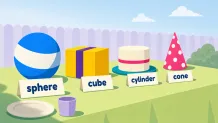
WorksheetsHow-toExplainerThe names of the solid shapes children learn, how many faces, edges, and vertices each one has, why schools count a cylinder's edges differently, which nets to fold first, and how to teach it all at home.
WorksheetsHow-toShape tracing, shape name cards and a poster, a sort by sides and corners, and a shape hunt, in black and white with answer keys, and what tracing shapes does and does not do for handwriting.
WorksheetsHow-toExplainerWhat a quadrilateral is, the six types and what each must have, why a square is a rectangle, the trapezoid question schools disagree on, and how to teach it at home.
WorksheetsHow-toExplainerWhat a line of symmetry is, how to find one by folding or with a mirror, how many lines each shape and capital letter has, symmetry in nature, activities, what grade learns it, and how to help at home.
WorksheetsHow-toExplainerWhat a tangram is and how to solve one, how to make one from paper, the six pattern blocks, whether they are good for math, how to teach tangrams step by step, activities by age, and free puzzles and mats.
WorksheetsHow-toExplainerWhat a pattern and its core are, what AB, AAB, ABB, and ABC mean, what children do with patterns at each age, how to teach patterns at home in six steps, and what a growing pattern is.
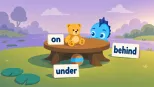
WorksheetsHow-toExplainerThe words that say where things are, in the order children learn them, what is normal at each age, how to teach them at home, when left and right come, games, picture books, and free worksheets.
Math Models Explained
WorksheetsHow-toExplainerWhat a number bond is, why schools draw it, what grade children learn it, and how to teach it at home, with a free blank template and worksheets.
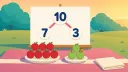
WorksheetsHow-toExplainerWhat a ten frame is, why schools use one instead of counting by ones, what each grade does with it, and how to make ten at the kitchen table.
WorksheetsHow-toExplainerWhat the units, rods, and flats stand for, how to show a number and a regroup with them, and free to-scale blocks to cut out, a mat, and practice sheets with answer keys.
WorksheetsHow-toExplainerWhat the bead rack on your child's homework is, why schools use it instead of counting by ones, which grades use it, and how to use one at home, with a free paper rekenrek.
How-toExplainerWhat a math manipulative is, what the research says makes one work, which ones fit which age, how to make them at home, and how to use them so they lead to written numbers.
How-toExplainerWhy math is taught differently now, the same problems solved the old way and the new way, when the standard algorithm arrives, and how to help with tonight's homework.
WorksheetsHow-toExplainerWhat an area model is, how to multiply with one step by step, how it lines up with the carrying method parents learned, which grade uses it, and free worksheets with an answer key.
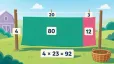
WorksheetsHow-toExplainerWhat a tape diagram is and why it has three names, which grade uses it, how to draw one step by step, and why schools teach it, with a free blank template and word problems.
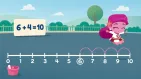
WorksheetsHow-toExplainerWhat a number line is and why it starts at 0, which grade uses one, how to add and subtract by jumps, and free printable lines from 0–10 to 0–100, blank and open.
WorksheetsHow-toExplainerWhat an array is, how it shows multiplication, which grade uses it, why schools teach it before the times tables, and how to explain it at home, with free array worksheets.