
Foundations
The why behind everything else. How reading develops, what is typical at each age, and how to check where your child is.
How-toExplainerFeaturedIs My Child on Track With Reading?A five-minute check you can do at home tonight, what is typical at each age, and what to do about what you find.Foundations
All foundations resources
ExplainerWhat to watch for at 4, 5, 6 and 7, how to tell dyslexia from a late start, how schools screen and evaluate, and what helps.
How-toGuideThe eight things that matter before school starts, a 5-minute check you run, and a guide and a worksheet to practice whatever comes next or needs work.

ExplainerWhat the three numbers on a kindergarten, first or second grade reading report mean, the placement ranges by grade, and what to practice when a skill row is low.

WorksheetsHow-toExplainerWhich letters to start with, how to say each sound, and what to do when they are not sticking.

How-toExplainerType your child's name and print a sheet with it on. The name stays in your browser.
WorksheetsHow-toExplainerReversing b and d is normal into second grade, it is not a dyslexia sign on its own, and a cue your child can check does more than correcting them.
ExplainerWhat age spelling starts, the five stages it arrives in, and why nite for night is a good sign.
ExplainerGuideWhat each kindergarten subtest asks your child to do, what the benchmark goals actually mean and why the test uses made-up words on purpose.

ExplainerWhich test your child took, what Above, At, Below, and Well Below Benchmark mean, what each kindergarten–second grade measure asks, and what to practice at home.

GuideThe useful question is not which app is best. It is which one fits your child right now.

ExplainerWhat a guided reading letter, a DRA number, and a Lexile score each mean, the kindergarten–second grade levels by grade, and what to practice when your child's level is low.

ExplainerThe reading skills a kindergarten report card marks, where those marks come from, what a mark like "approaching" means, and what to practice at home.
ExplainerWhat happens when you hear your child is behind in reading, what that means, and what you can do about it.

WorksheetsHow-toTwo bingo sheets for the trip itself, one for the car and one for the plane. Nobody has to call the words: the window does it. Spot a truck or a cloud, say the word, and everyone covers it on their board.

How-toWhere to start, the order the skills come in, what a daily routine looks like, and what to do when it stalls.

How-toExplainerThe six stages phonics runs through, what to look for at each one, and how to tell when your child is ready to move on.

ExplainerWhat the group is, how RTI and MTSS tiers work, how the school decides when it ends, and how to help at home without repeating the lesson.
ExplainerWhat a RIT score is, the average kindergarten–second grade reading scores from NWEA's 2025 norms, and how MAP Reading Fluency differs from MAP Growth.

How-toExplainerFind out which reading skill your child needs next, how to help at home, and when to check progress.

How-toExplainerStart with lowercase, form letters from the top down, and expect b and d to get mixed up for longer than you think.
ExplainerWhy unstressed vowels turn into a quick ‘uh,’ why that makes spelling hard, and when a child is ready to learn it.
ExplainerWhy children resist reading practice, which part of it to change first, and when to stop pushing.

ExplainerHow to tell whether practice is working, when a flat month matters, and what to change in the minutes.

ExplainerGuideWhat reading apps do well, where they fall short, and how to tell if one can help your child.

ExplainerA plain-English guide for parents: what the research found, why schools are changing, and what it means at home.

WorksheetsHow-toExplainerThe whole alphabet in both cases, free to print, plus what to do with it once it is on the table.
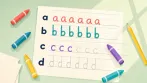
WorksheetsHow-toExplainerWhy a picture beside a letter works, and the free printables that use one.
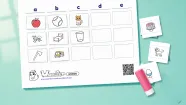
How-toExplainerThere is no single research-proven order for teaching letters. Here is the sequence we use, why we chose it, and a five-minute way to assess any program.

WorksheetsHow-toLooking for something to do with your kid this fall that is not a screen? October makes it easy. Pumpkins, costumes, spooky decorations and long dark walks give kids plenty to see, hear and talk about. Most of what is on this page needs no paper at all.
