
Worksheets
Preschool Worksheets
Free preschool worksheets for every early reading and writing skill a 3- or 4-year-old works on: tracing lines and letters, the letters in your child's name, letter names and sounds, rhyming, the first and last sounds in a word, and the words for shapes and positions.
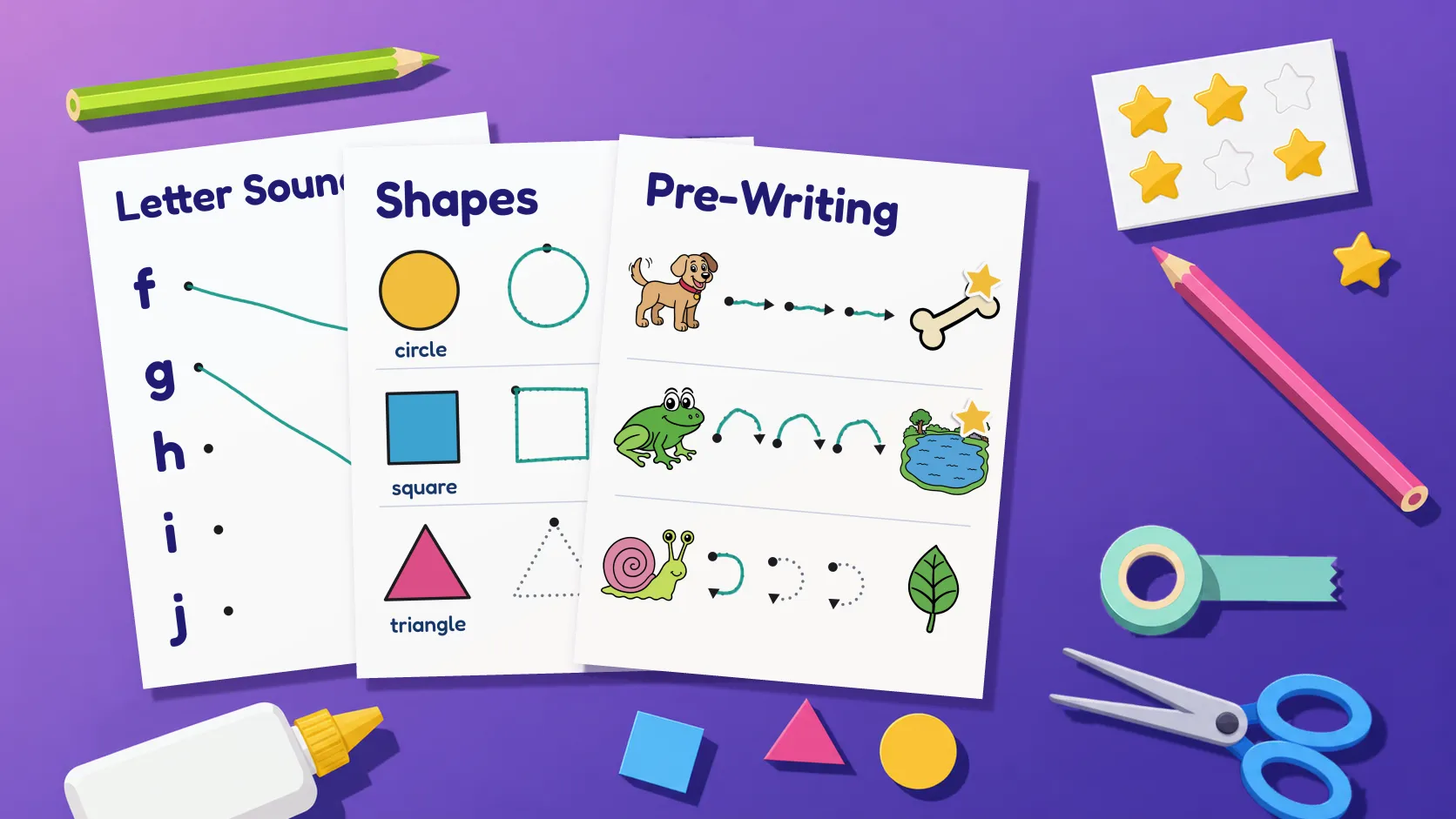
A 3-year-old starts with lines, shapes, and the letters in their own name, and a 4-year-old adds letter sounds, telling which words rhyme, and the first sound in a word. The worksheets here follow that order, one to three for each skill, with a link to the skill’s own page for more. Keep each session to a few minutes: one sheet, then back to play.
What should my preschooler work on at 3 and at 4?
Head Start’s Early Learning Outcomes Framework sets out what a preschooler is expected to do between 3 and 4 and between 4 and 5. It is the federal framework for Head Start programs. The table puts its goals for writing, letters, sounds, and shapes beside the worksheets that practice each one.
| Skill | Ages 3–4 | Ages 4–5 | Worksheets |
|---|---|---|---|
| Drawing lines and shapes | ”Drawing simple shapes like circles" | "Drawing letter-like forms” | Tracing lines and shapes |
| Letters | ”Recognizing letters from one’s name” | Names “at least half of the letters in the alphabet” | Letters in your child’s name, Letter names and sounds |
| Letter sounds | Not listed until 4 | ”Produces the sound of many recognized letters” | Letter names and sounds |
| Rhyming | Shows “enjoyment of rhyme and alliteration" | "Identifying which words rhyme from a group of three: hat, cat, log” | Rhyming |
| First sounds | With support, tells “when two words begin with the same sound" | "Dog begins with /d/” | The first sound in a word |
| Shapes | ”Recognizes and names typical circle, square, and sometimes a triangle” | Names basic shapes “regardless of size and orientation” | Shapes and position words |
By the end of preschool, the Early Learning Outcomes Framework expects a child to name 18 uppercase and 15 lowercase letters and know the sounds of several. These are goals for the end of the year, not a test for every 4-year-old. A child starting kindergarten next fall can take our kindergarten readiness check, an eight-item checklist that takes about 5 minutes.
Are worksheets good for a 3- or 4-year-old, and how many a day?
Worksheets are good for a 3- or 4-year-old in small doses: one sheet at a time, a few minutes long, stopped while your child still wants more. The American Academy of Pediatrics calls play with parents and other children “a singular opportunity to promote the social-emotional, cognitive, language, and self-regulation skills” a child needs. It asks for “a balanced curriculum that includes the importance of playful learning,” and a worksheet is one short part of that balance.
Pick a sheet about something your child knows, like a bird flying down to its nest. Let your child pick the crayon, trace with a finger first, and add a sticker at the end. Say the name of every picture out loud together, since a sheet cannot hear your child say a sound. Every day is fine when each session is this short, and so is three times a week. For a preschool teacher, each skill on this page has its own sheets, so a small group can take one skill a week.
Printable or digital: which is better for a preschooler?
Printable worksheets and apps do different jobs for a preschooler. On paper, your child holds a crayon, traces a line, and cuts with scissors: Head Start’s framework puts “cutting paper with scissors” and drawing circles between 3 and 4. An app can say a sound out loud and let your child answer by tapping a picture, which a printed page cannot do.
Preschool tracing and writing worksheets
Before letters, a preschooler practices the lines and shapes letters are made of, then the letters in their own name.
Tracing lines and shapes
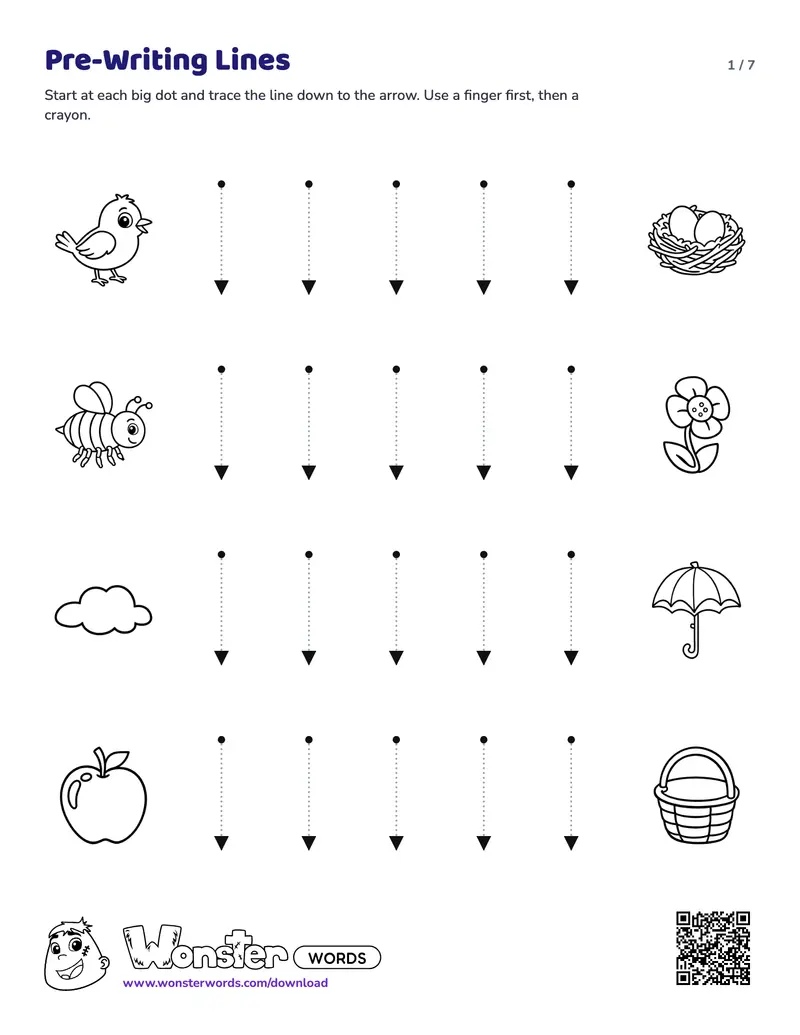
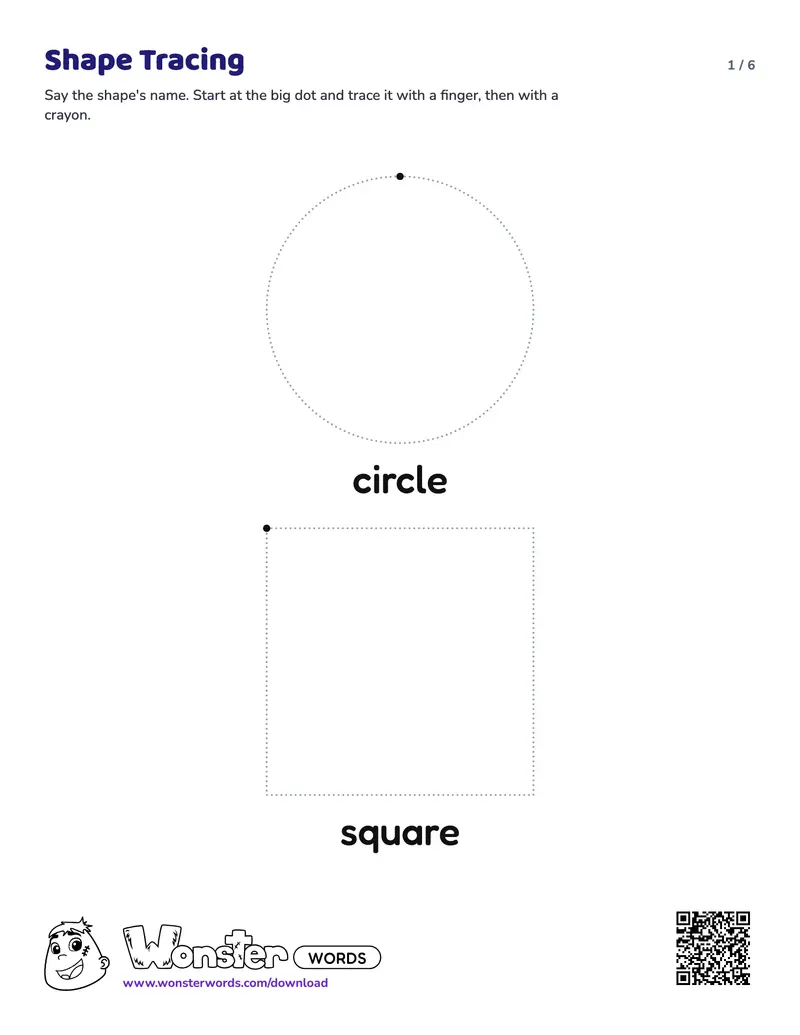
Children draw the lines letters are made of before they write letters, and they learn them in a steady order. A line down comes at around 2, a line across and a circle at around 3, and a slanted line at around 4 and a half, according to the Somerset NHS children’s therapy service. The HSE in Ireland gives the same order, and adds, “Every child develops at their own pace.” Our pre-writing lines sheet follows that order with short dotted lines, each with a big dot to start at and an arrow to finish on. Shape tracing adds the circle, square, and triangle.
Free PDF · no sign-up
Feedback?Printables for Preschool Tracing Lines and Shapes
Some come from the Free Shapes Worksheets for Preschool and Kindergarten page.
- Pre-Writing Lines (PDF)90 strokes · 7 pages
Preview page 1Preview
- Shape Tracing (PDF)9 shapes · 6 pages
Preview page 1Preview
The letters in your child's name
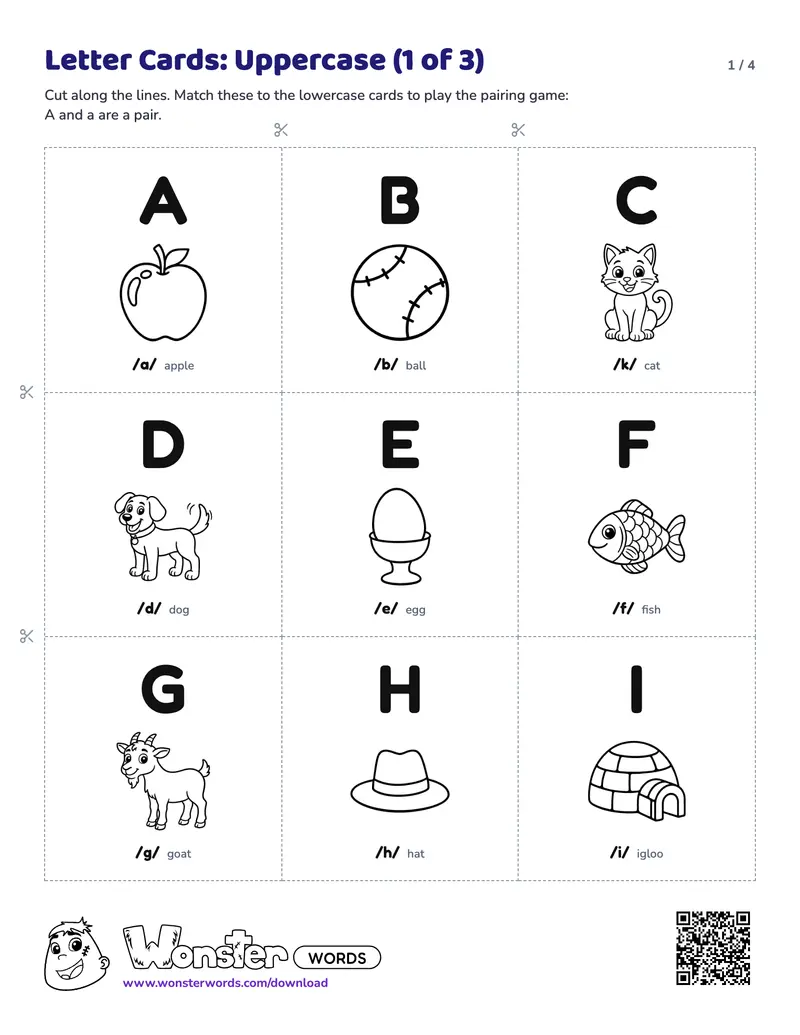
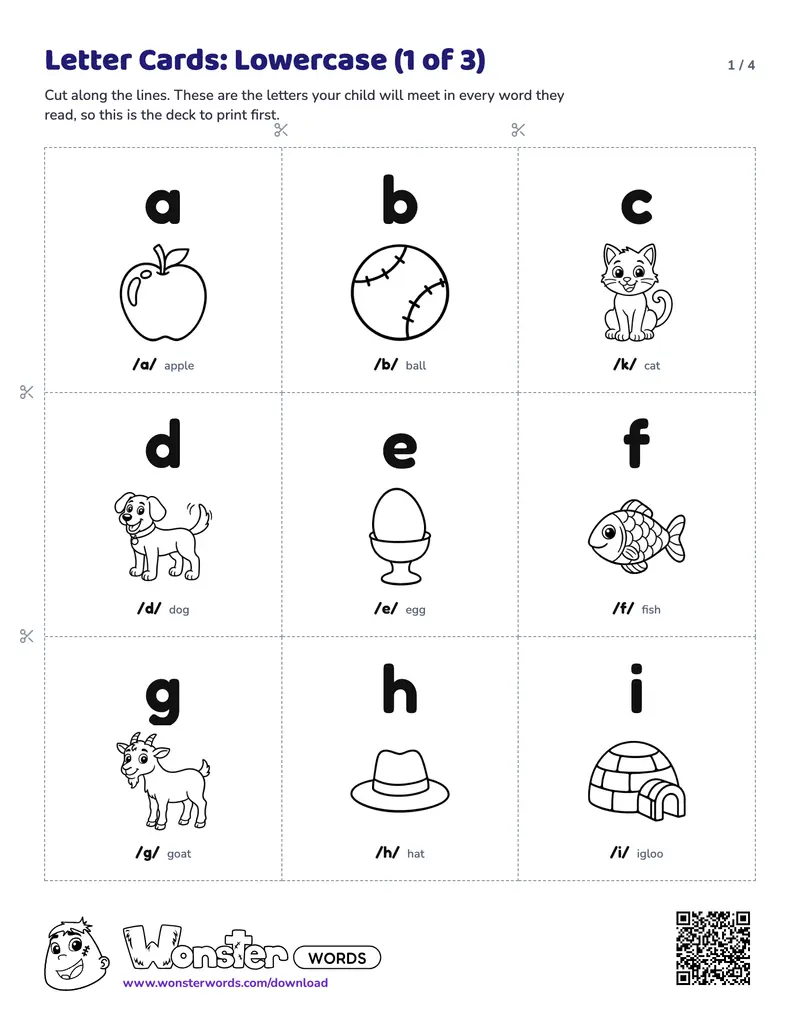
At 3, a child starts recognizing the letters in their own name. Head Start’s framework lists “recognizing letters from one’s name” between 3 and 4. Print both card decks, plus a second copy for any letter the name repeats, pull out the letters of your child’s name, and lay them out together, with a capital first letter and the rest lowercase, the way a name is written. To trace the whole name, type it into our name tracing generator. Our ABC games page has games to play with the same cards.
Free PDF · no sign-up
Feedback?Printables for Preschool Letters in Your Child's Name
From the ABC Games and Letter Recognition Activities page.
- Letter Cards: Uppercase (PDF)26 cards · 4 pages
Preview page 1Preview
- Letter Cards: Lowercase (PDF)26 cards · 4 pages
Preview page 1Preview
Tracing letters
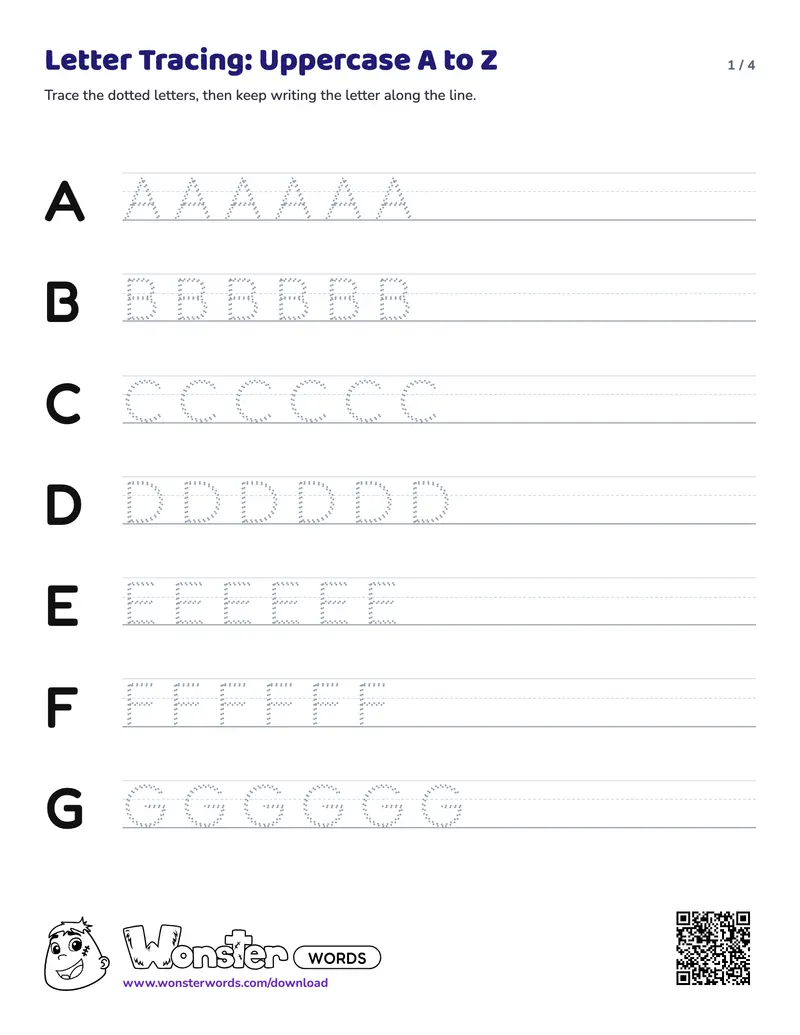
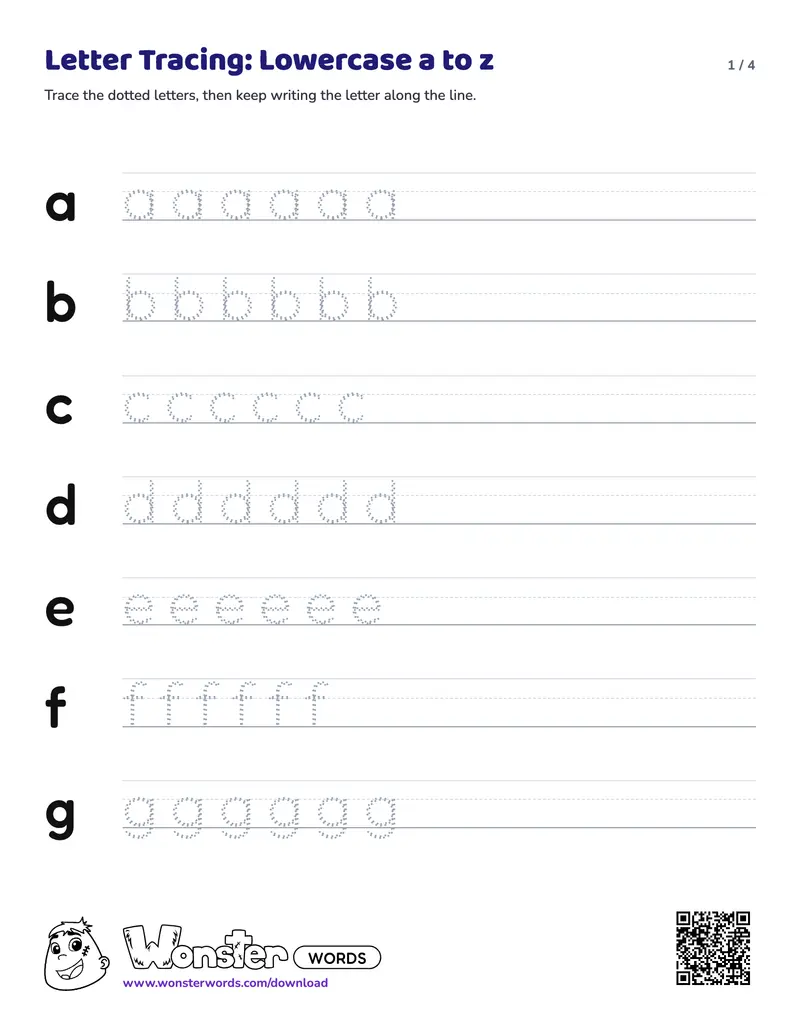
Tracing letters comes after tracing lines, once a line down, a line across, and a circle feel easy. Head Start’s framework puts “drawing letter-like forms” between 4 and 5. Each sheet gives every letter 6 dotted copies to follow, uppercase on one and lowercase on the other. Our letter tracing worksheets have more, and our letter formation guide covers how each letter is formed and whether a child is ready to start.
Free PDF · no sign-up
Feedback?Printables for Preschool Letter Tracing
From the Letter Tracing Worksheets page.
- Letter Tracing: Uppercase (PDF)26 letters · 4 pages
Preview page 1Preview
- Letter Tracing: Lowercase (PDF)26 letters · 4 pages
Preview page 1Preview
Preschool letter and sound worksheets
A 4-year-old starts to connect each letter with its sound and to hear the sounds inside spoken words: rhymes, first sounds, and last sounds.
Letter names and sounds
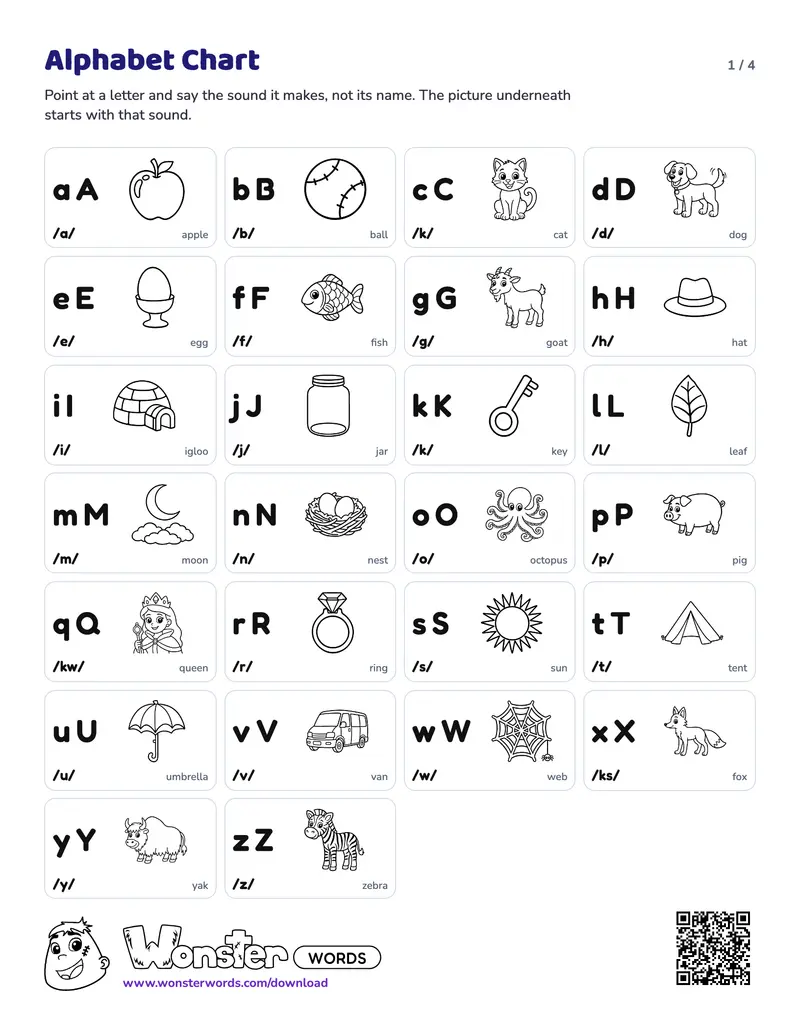
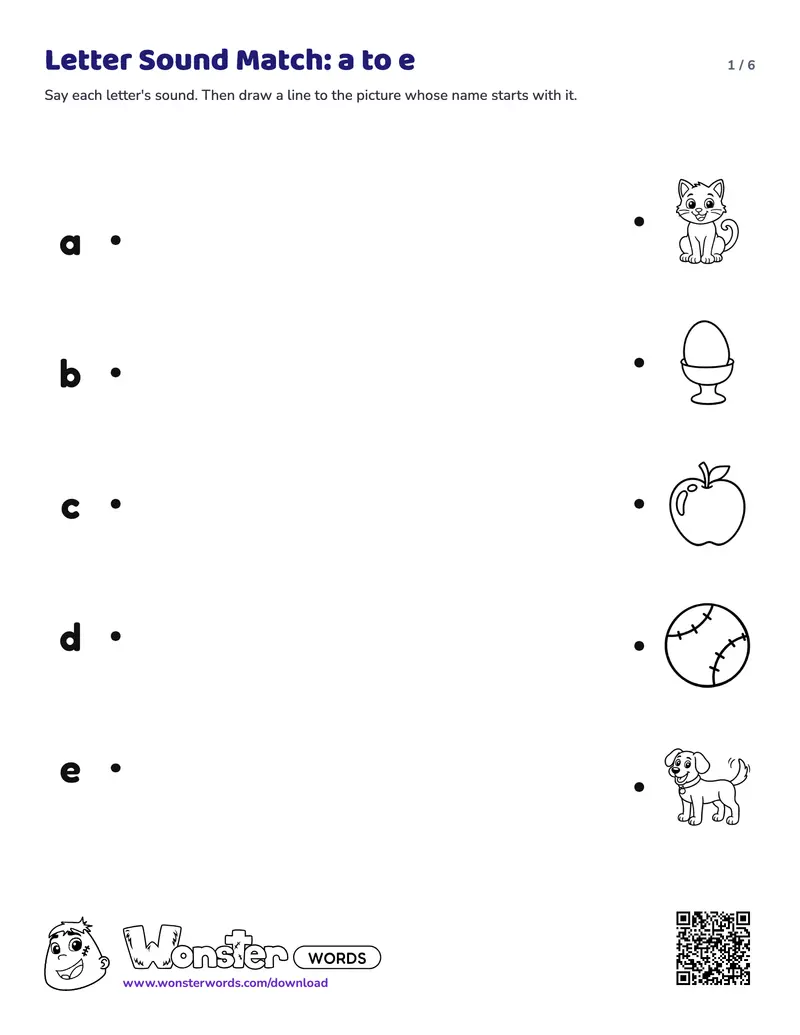
At 4, a child starts to say the sound a letter makes as well as its name. Head Start’s framework has a 4-year-old naming “at least half of the letters in the alphabet” and producing “the sound of many recognized letters.” The alphabet chart puts each letter, in both cases, beside a picture that starts with its sound. On the matching sheets, your child draws a line from each letter to the picture whose name starts with its sound. Our alphabet and letter sounds guide has a letter sound check. An alphabet dot to dot practices the letter names in order; say each letter’s sound as well as its name as your child joins it.
Free PDF · no sign-up
Feedback?Printables for Preschool Letter Names and Sounds
From the How to Teach the Alphabet and Letter Sounds page.
- Alphabet Chart (PDF)26 letters · 4 pages
Preview page 1Preview
- Letter Sound Match (PDF)25 letters · answer key included · 6 pages
Preview page 1Preview
Rhyming: cat, hat, map, cap
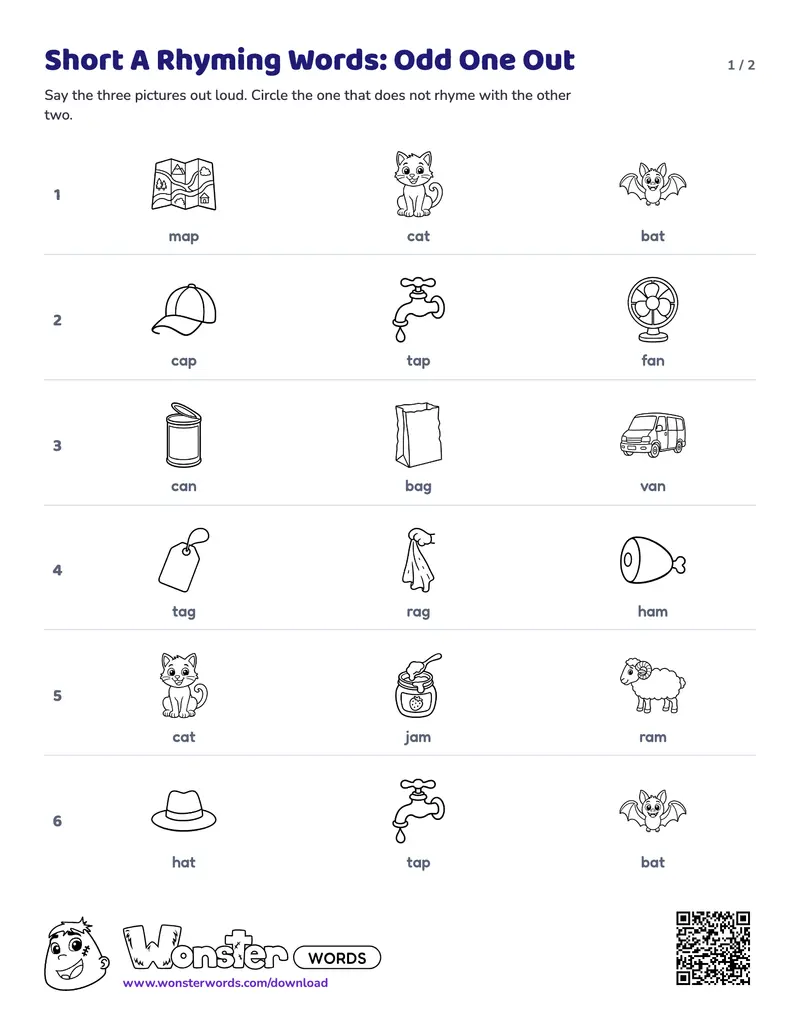
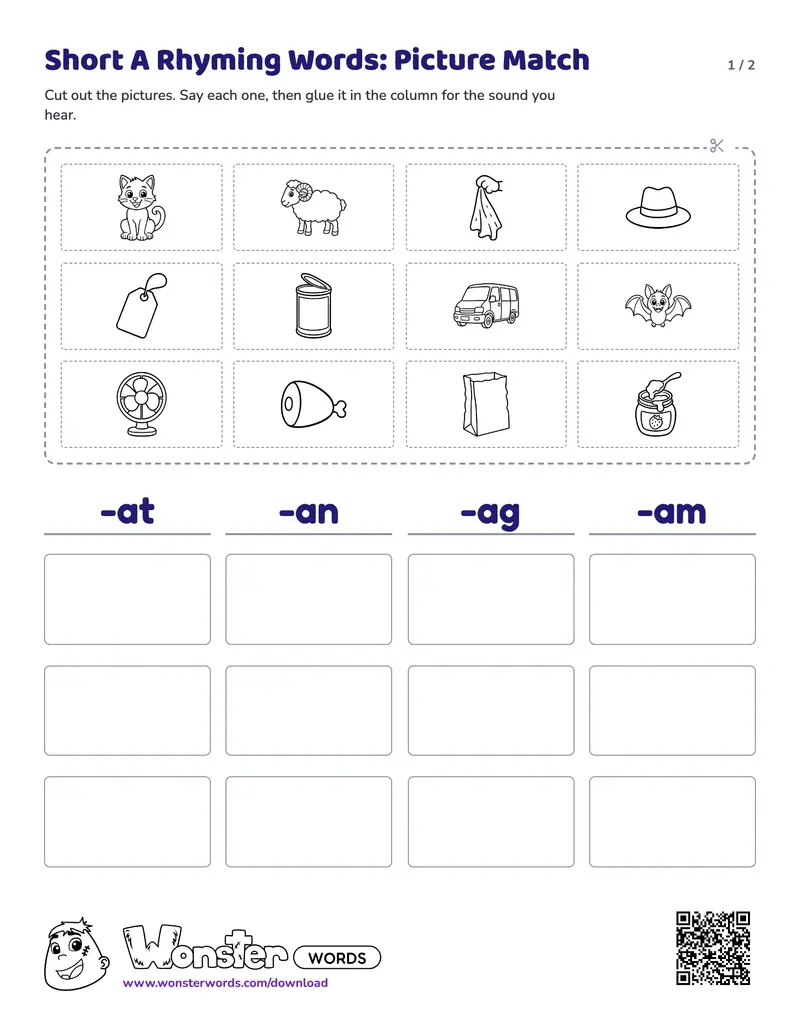
Two words rhyme when they end the same way, like cat and hat. Head Start’s framework has a 3-year-old enjoying rhymes and a 4-year-old picking out “which words rhyme from a group of three: hat, cat, log.” These sheets are for listening, so say each picture’s name out loud. Our rhyming words page has more rhyme families, and our rhyming activities need no paper at all.
- cat
- hat
- bat
- map
- cap
- tap
- can
- fan
- van
- bag
- tag
- rag
- ham
- jam
- ram
Free PDF · no sign-up
Feedback?Printables for Preschool Rhyming
From the Rhyming Words page.
- Short A Rhyming Words: Odd One Out (PDF)6 rows · answer key included · 2 pages
Preview page 1Preview
The first sound in a word
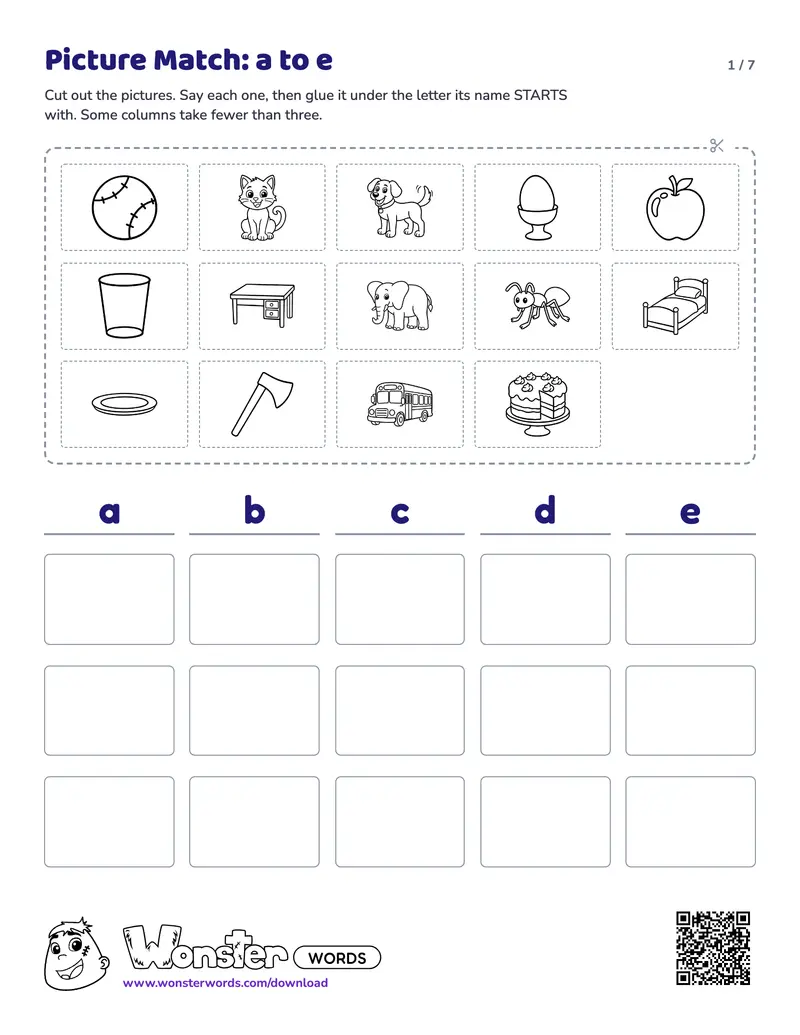
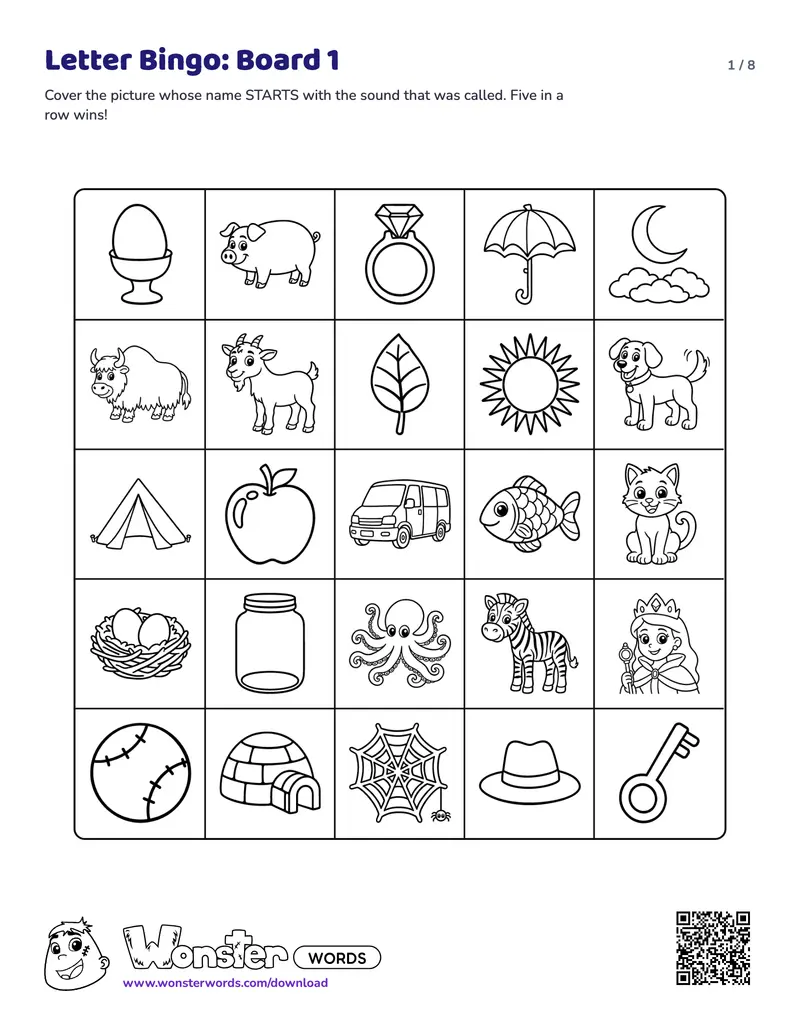
Hearing the first sound in a spoken word is a goal for the end of preschool: Head Start’s framework expects a child to say “Dog begins with /d/.” On the picture match, your child glues each picture under the letter its name starts with. Letter bingo turns the same skill into a game: you say a letter’s sound, and everyone covers a picture that starts with it. Our beginning sounds worksheets have more.
Free PDF · no sign-up
Feedback?Printables for Preschool Beginning Sounds
From the Beginning Sounds Worksheets page.
- Alphabet Picture Match (PDF)25 letters · answer key included · 7 pages
Preview page 1Preview
- Letter Bingo (PDF)25 letters · 8 pages
Preview page 1Preview
The last sound in a word
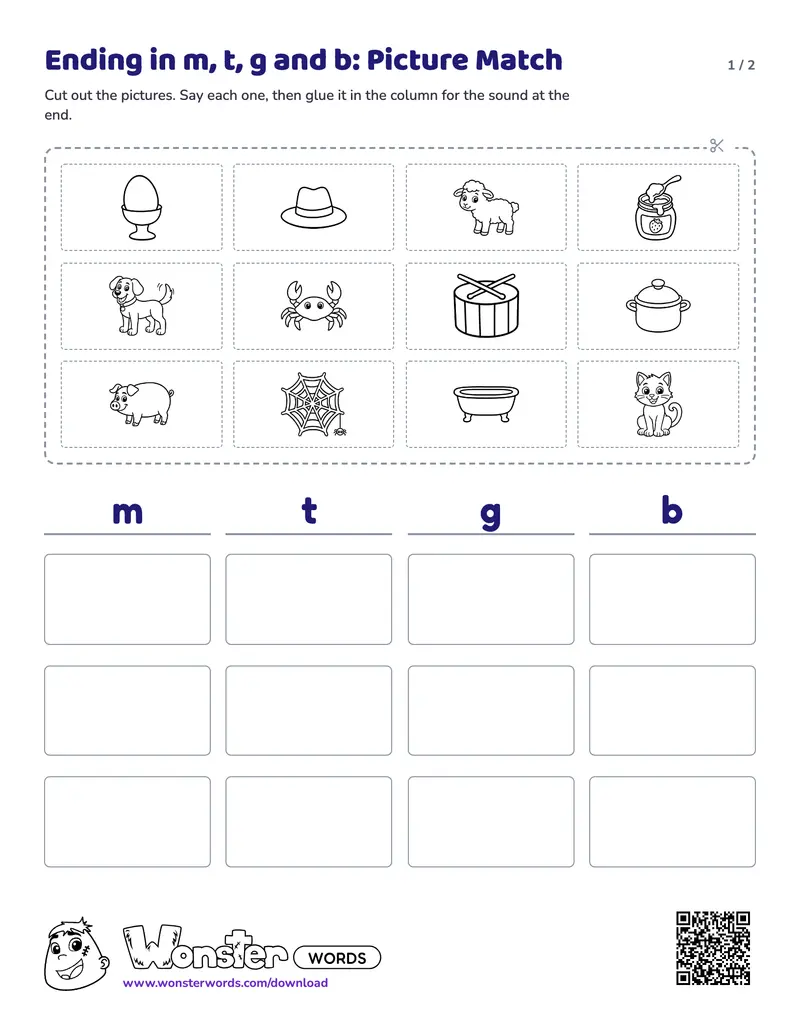
Once the first sound is easy, a 4-year-old can listen for the last one: hat ends with the sound /t/. On this sheet, your child glues each picture under the sound its name ends with. Our ending sounds page has sheets for n, p, and d, and our guide to phonological awareness explains how these listening skills build on each other.
- drum
- jam
- lamb
- gum
- cat
- hat
- pot
- pig
- dog
- egg
- crab
- tub
- web
Preschool shape and position word worksheets
Shapes and position words
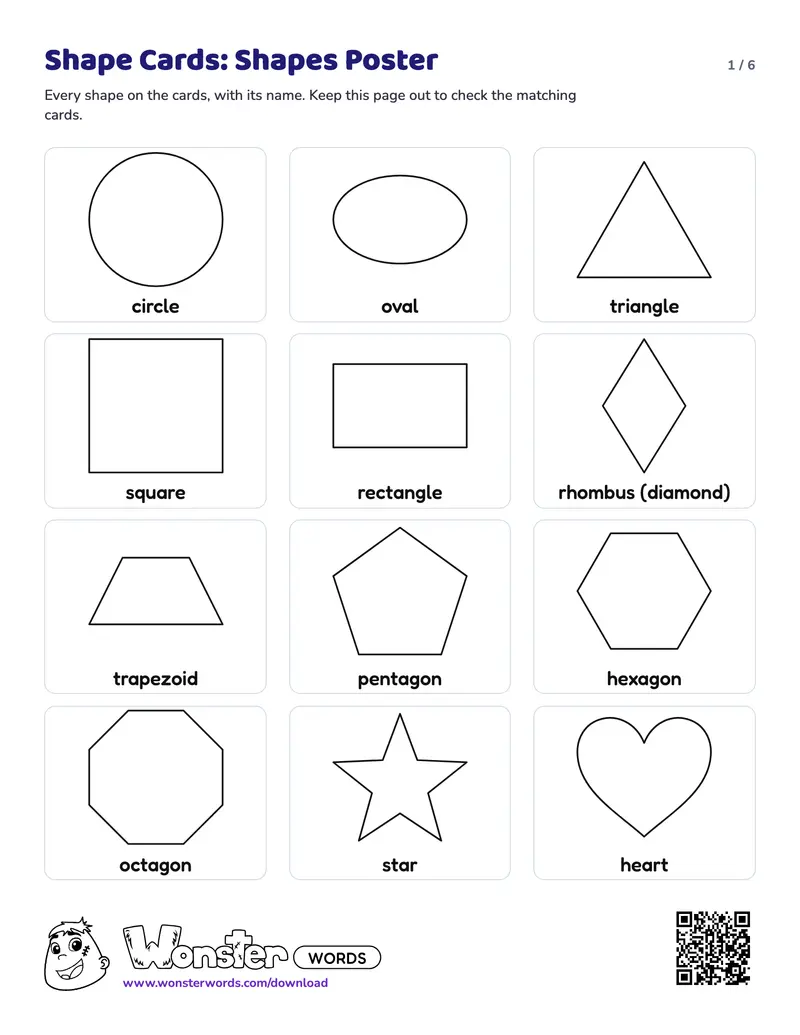
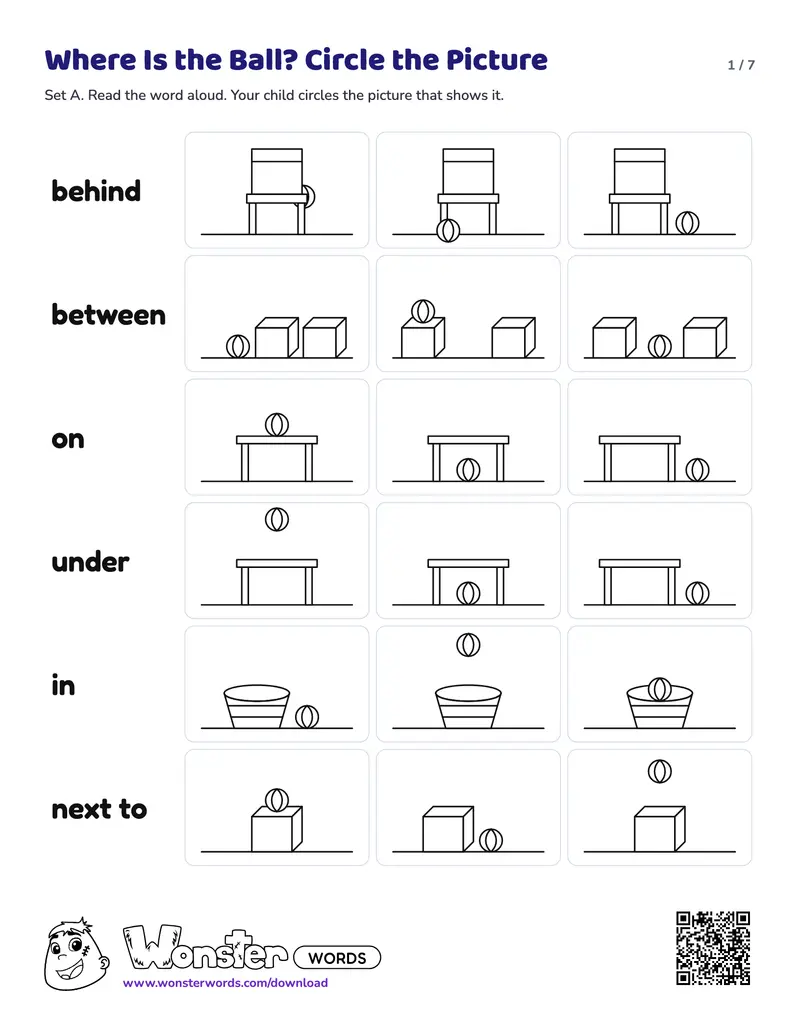
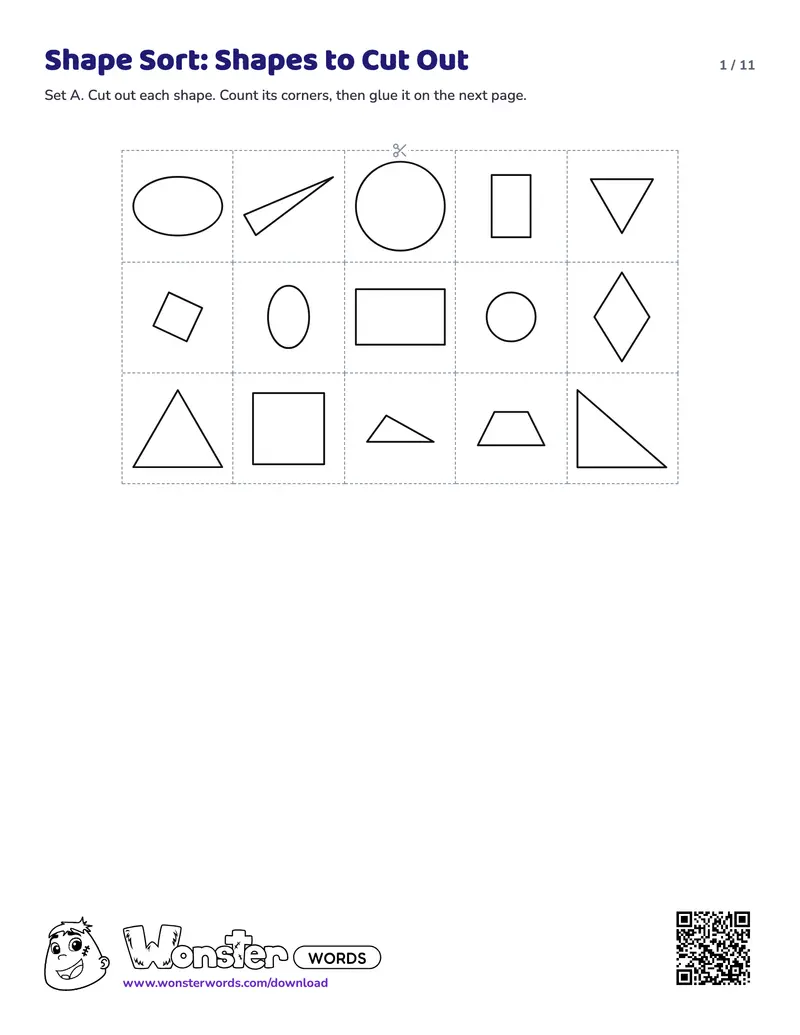
At 3 and 4, shape names and position words are new words to learn, like circle, square, under, and behind. Head Start’s framework has a 3-year-old naming a “typical circle, square, and sometimes a triangle” and a 4-year-old using words like “up/down, and in front/behind.” The shape cards name 12 shapes, the position words sheet asks your child to circle the ball that is in, on, or under, and the shape sort is cutting practice too. Our shapes worksheets and position words guide have more.
Counting is saying the number words in order while touching each thing. Our guide to how children learn to count and our number tracing worksheets have those sheets.
Free PDF · no sign-up
Feedback?Printables for Preschool Shapes and Position Words
From the Free Shapes Worksheets for Preschool and Kindergarten and Position Words for Kids pages.
- Shape Cards (PDF)36 cards · 6 pages
Preview page 1Preview
- Where Is the Ball? (PDF)14 pictures · answer key included · 7 pages
Preview page 1Preview
- Shape Sort (PDF)39 shapes to sort · answer key included · 11 pages
Preview page 1Preview
Free preschool worksheets, and making your own
Every worksheet on this page is a free PDF that downloads straight from its row. A good free sheet practices one skill, is big enough for a crayon, and prints in black and white, as every sheet here does. Each section’s sheets download one at a time, so print only the skill your child is working on.
To make a sheet of your child’s own name, type it into our name tracing tool and print. When letters and their sounds feel easy, our kindergarten worksheets pick up with CVC words, sight words, and short stories.
Frequently asked questions
Should 3-year-olds use worksheets daily or weekly?
Daily and weekly both work for a 3-year-old, as long as each session is short. One sheet, a few minutes, stopped while your child still wants more, is a good dose at 3, and every day is fine at that size. Keep plenty of play in the week too. Three short sheets and lots of talk, songs, and books make as good a week as seven sheets.
What types of skills do preschool worksheets typically focus on?
Preschool worksheets focus on pre-writing and early reading. A 3-year-old traces lines and shapes, finds the letters in their own name, and enjoys rhymes. A 4-year-old adds letter names and sounds, the first sound in a word, and telling which words rhyme. Head Start's Early Learning Outcomes Framework expects a child to name 18 uppercase and 15 lowercase letters by the end of preschool. Shape and position words, such as circle and under, are vocabulary at this age.
Are free preschool worksheets worth it?
A free preschool worksheet is worth it if it practices one skill, is big enough for a crayon, and prints in black and white. Every worksheet on this page is a free PDF that downloads straight from its row, and each one prints in black and white. A free sheet is worth less when it mixes five skills on one page or needs a color printer to make sense.
Are printable worksheets or interactive apps better for early learning?
Printable worksheets and apps do different jobs, and a preschooler can use both. Paper is for the hand: holding a crayon, tracing a line, cutting with scissors. An app can say a sound out loud and let a child answer by tapping a picture, which no sheet can do. Wonster Words, for ages 2–8, cues each letter sound with a picture of a familiar thing, so a child who cannot read yet can take part.
Are printable tracing worksheets effective for 3-year-olds?
Tracing worksheets suit a 3-year-old when they start with lines, not letters. Children draw a line down first, then a line across and a circle at around 3, and a slanted line at around 4 and a half, according to an NHS children's therapy checklist. A 3-year-old who traces short lines and shapes is practicing the strokes every letter is built from. Letter tracing comes later, after the lines feel easy.
What makes a preschool worksheet both fun and educational?
A fun preschool worksheet has one skill, big pictures, and a short page. Pick one about something your child knows, like a dog running to its bone, that they can finish in a few minutes. Let your child pick the crayon color, trace with a finger first, and add a sticker at the end. Stop after one page, while it is still fun.
Related lists
Looking for something else?
Looking for something else?