
Writing
Picture Writing Prompts for Kids
Twelve pictures to write about, each with a question to ask, the first words of the answer, and a word bank.
A picture writing prompt is a picture your child looks at, talks about, and then writes about. The picture gives a beginning writer the hard part of a story for free: who is in it, where it happens, or what is going on. Your job is the next question, “What happens next?”, because a picture on its own gets a label (“a ship”) rather than a sentence. Each of the 12 pictures below comes with a question to ask, a sentence starter (the first words of the answer), and a word bank of three or four words from the picture. In kindergarten your child says the answer and writes a word or one sentence. In 1st grade they write a few sentences in order, and by 2nd grade a short story.
The pictures come from Wonster Words, a reading and spelling app for children. Three show its characters doing something, and the rest show places from their world.
Picture writing prompts with characters: who is doing what?
A picture with characters in it gives your child the “who” of a story, and the question asks what they are doing. These three show the Wonster Words characters. Frank is a young Frankenstein who loves to eat and help his friends. Patti is a little mummy who loves to run, with a pet butterfly on her head. Wart is a small blue creature who scares easily, Olivia loves cooking and parties, and Ari is an inventor whose machines usually break.
Picture 1: The ship leaves the dock
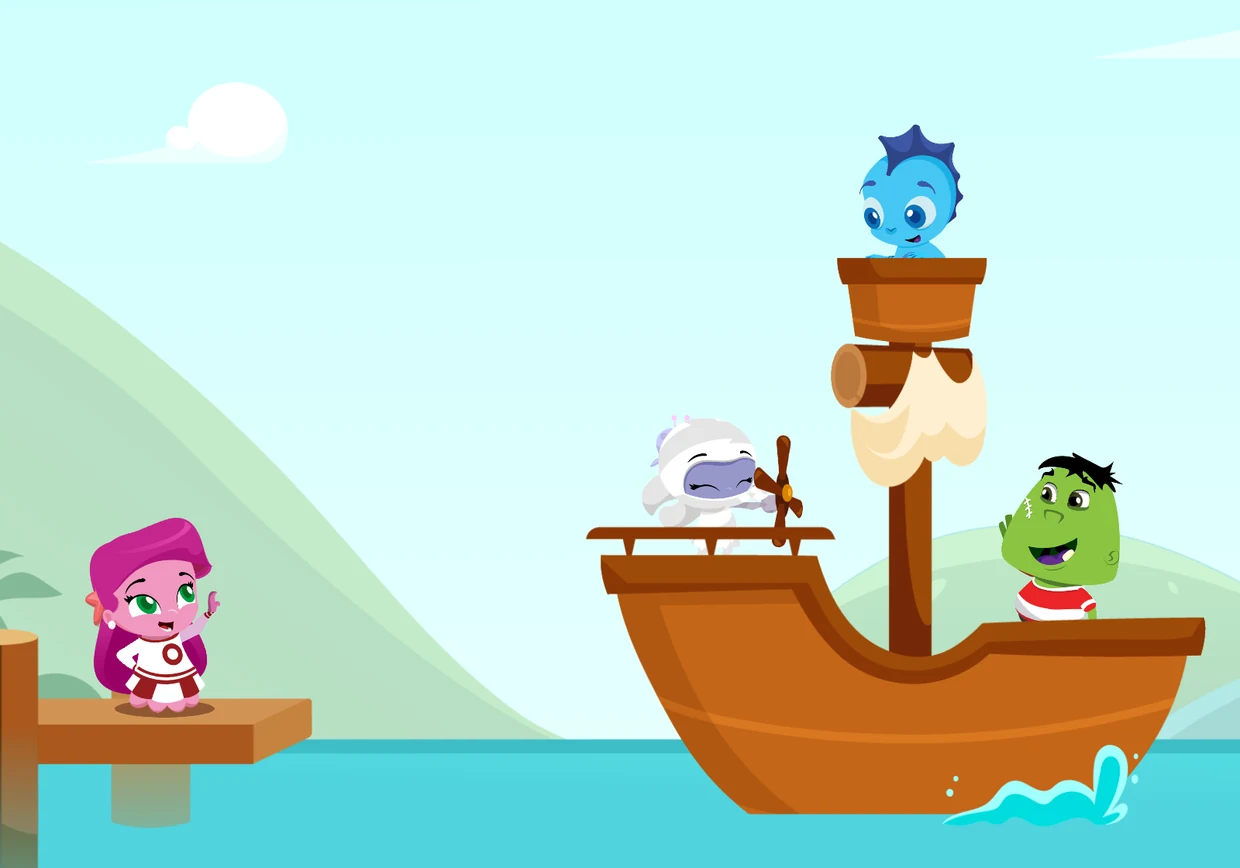
- Ask: Where is the ship going? Why is Olivia staying on the dock?
- Sentence starter: “The ship is going to …”
- Word bank: ship, sea, wave, dock
Picture 2: Patti wins the race
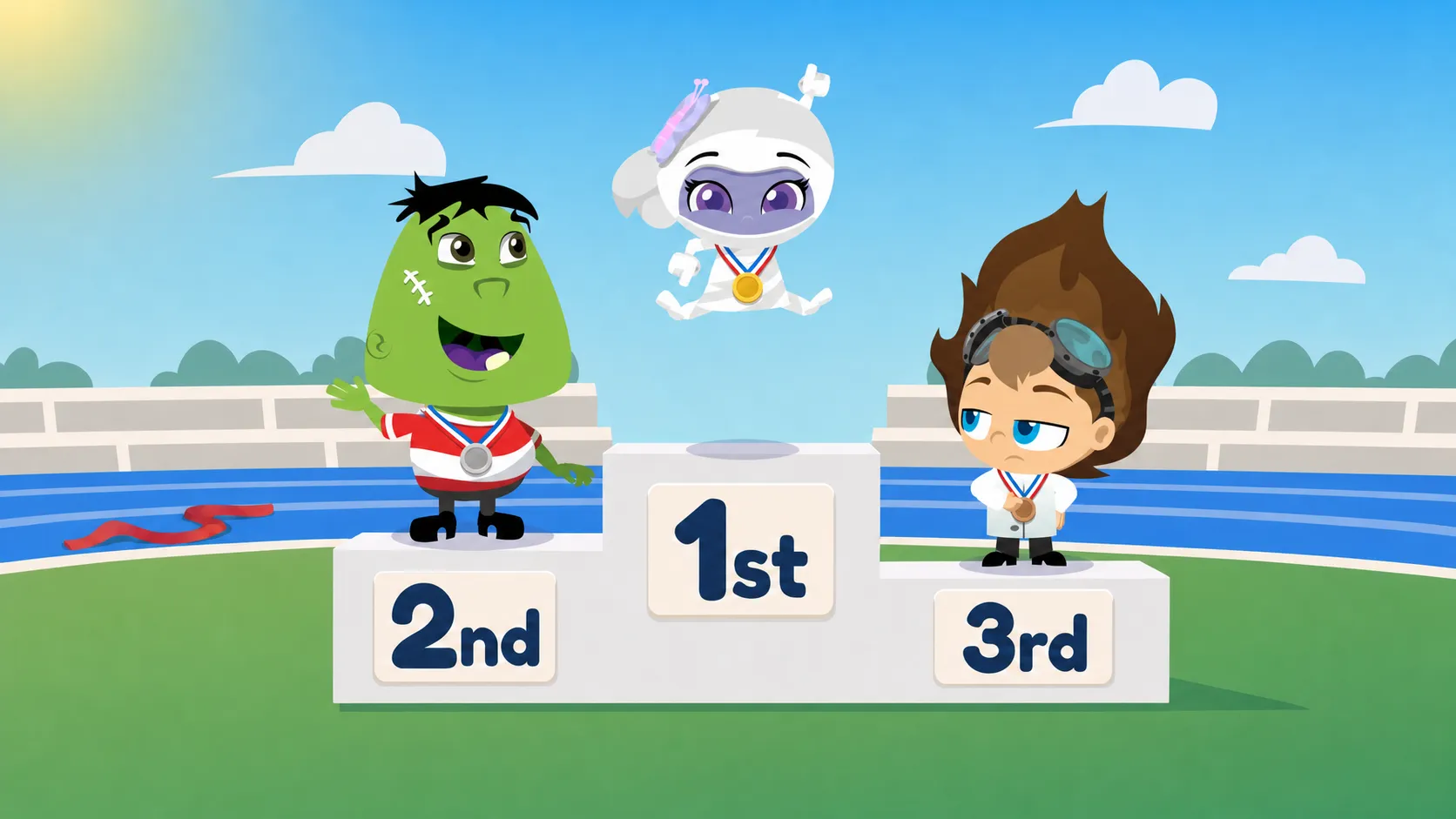
- Ask: Patti won the race. What happened in the race? How does Ari feel?
- Sentence starter: “Patti ran so fast that …”
- Word bank: run, fast, win, top
Picture 3: The walk in the autumn woods
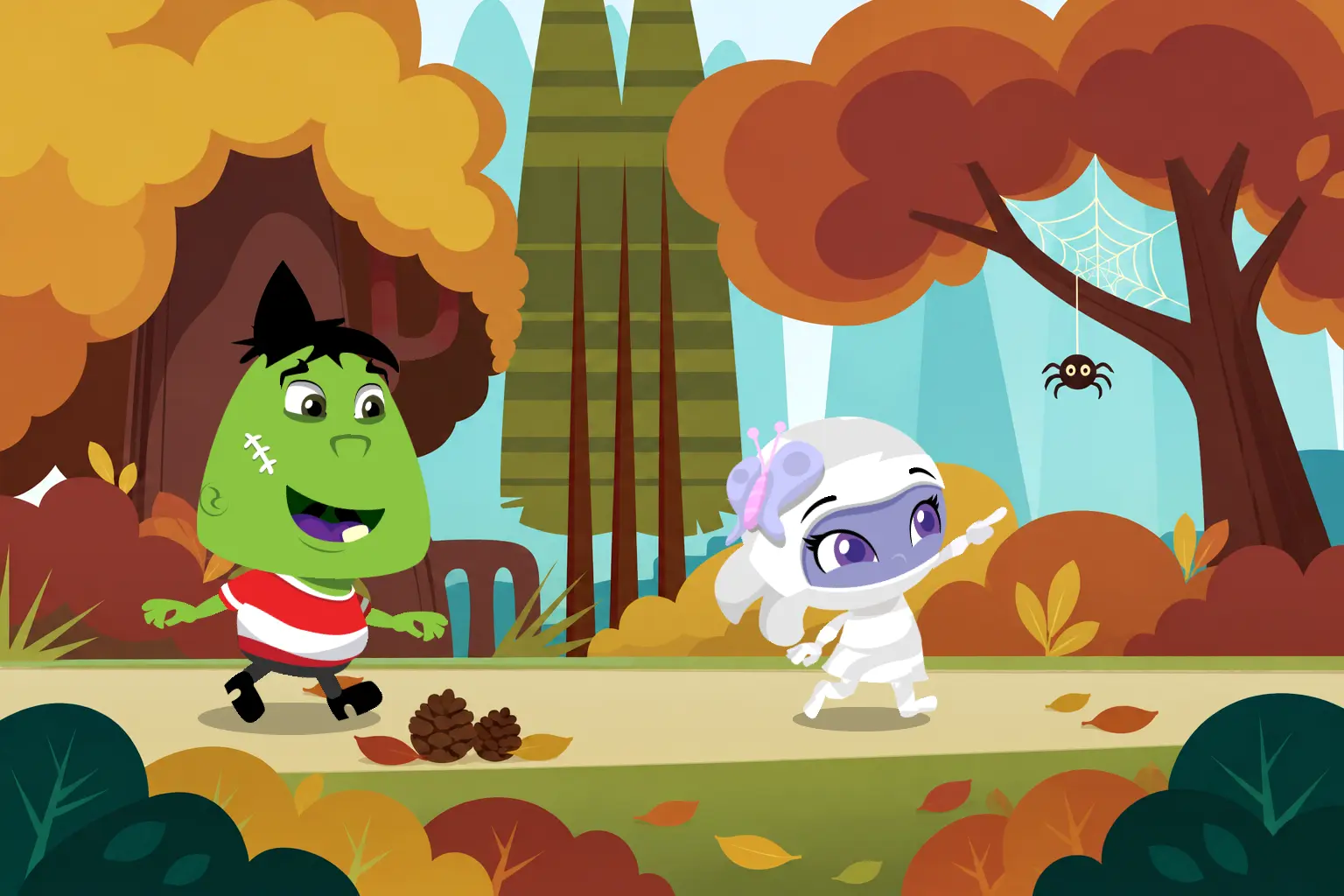
- Ask: What did Patti spot? What will Frank do when he sees it?
- Sentence starter: “Patti saw a …”
- Word bank: web, hat, leaf, walk
Pictures of places to write about: where does the story happen?
A picture of a place gives your child the “where” of a story, and they decide who comes along and what happens there. A place with nobody in it leaves the most room: your child can put themselves in the picture, or a friend, or a character from the first three pictures.
Picture 4: The locked door
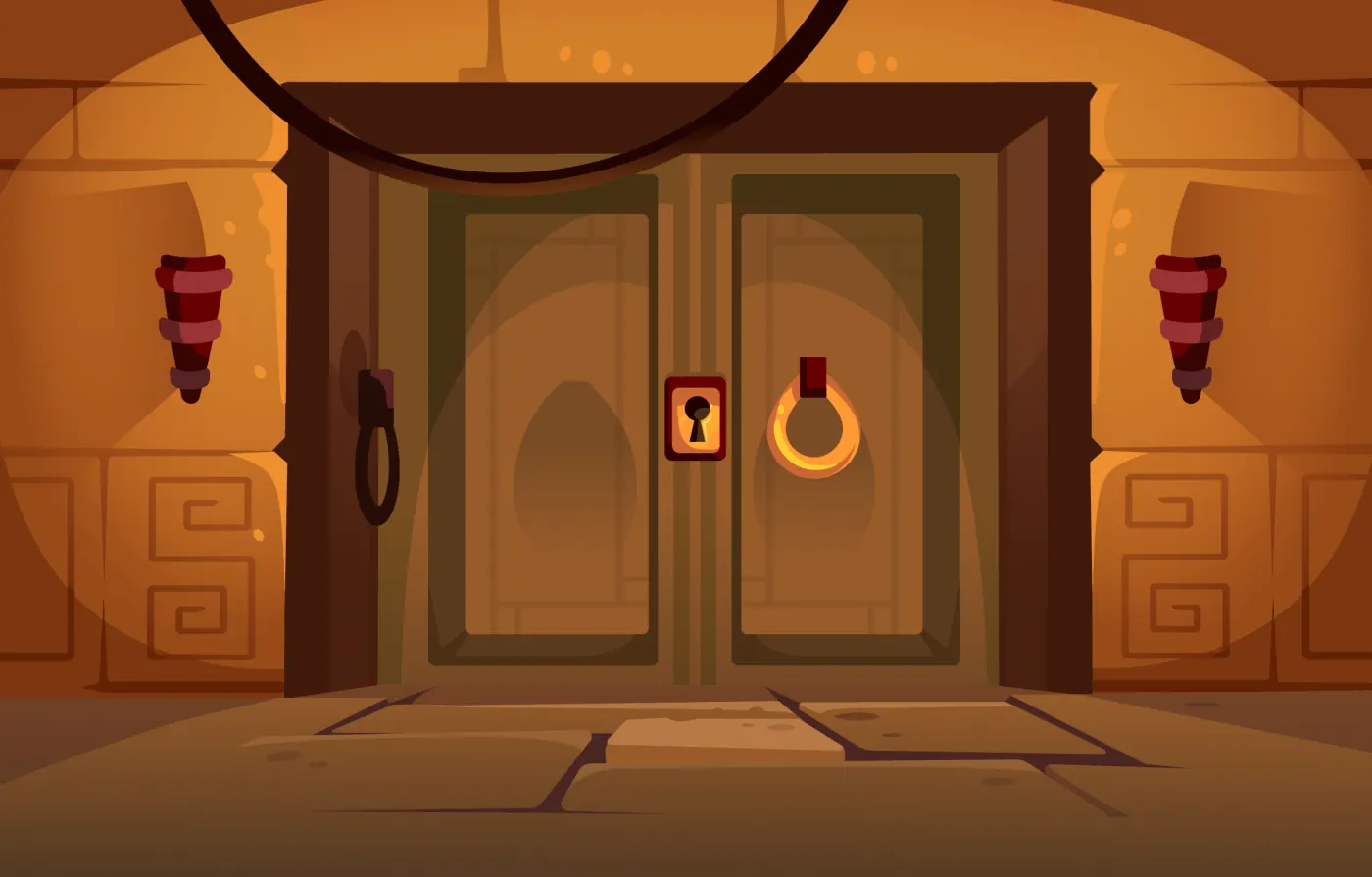
- Ask: This door is in the old stone ruin where Patti lives. What is behind the locked door?
- Sentence starter: “Behind the door, there is …”
- Word bank: door, lock, key, dark
Picture 5: Wart’s front door
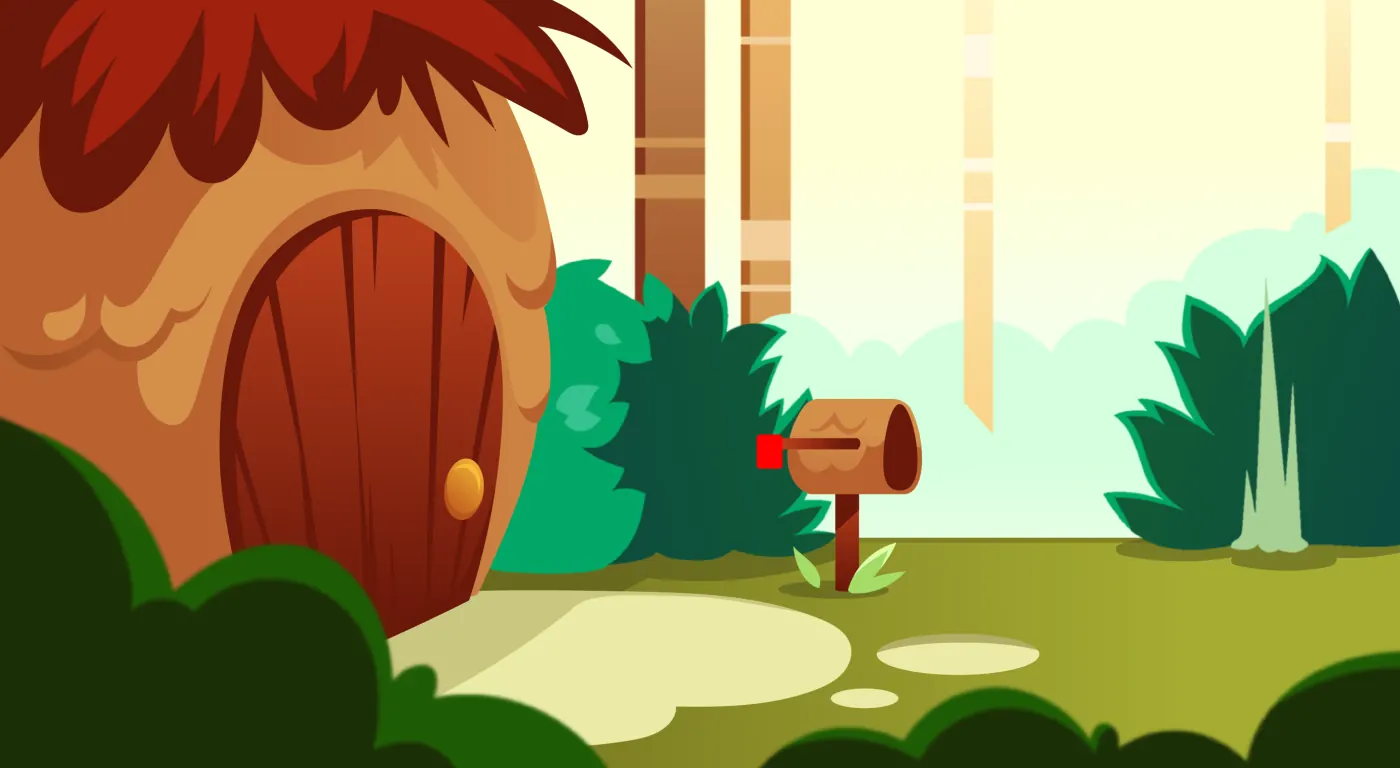
- Ask: Wart lives here. A letter came in his mailbox. Who is it from, and what does it say?
- Sentence starter: “Dear Wart, …”
- Word bank: box, mail, red, hut
Picture 6: The planet with two moons

- Ask: You land your rocket here. What do you see, and who do you meet?
- Sentence starter: “On this planet, I saw …”
- Word bank: moon, rock, pond, sky
Picture 7: The sandcastle
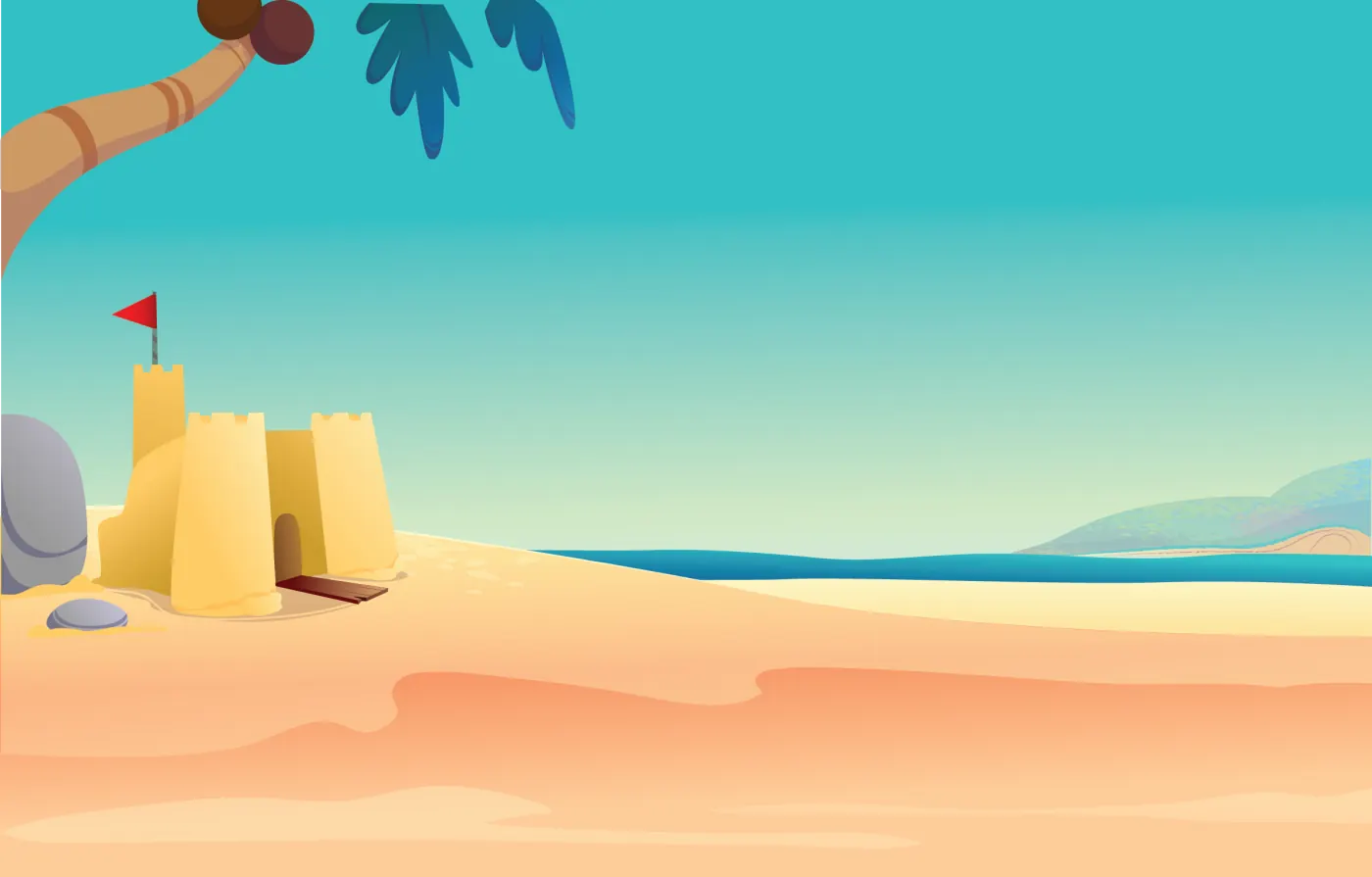
- Ask: Who lives in the sandcastle? What happens when the tide comes in?
- Sentence starter: “In the sandcastle lives …”
- Word bank: sand, flag, sea, rock
Picture 8: The carnival
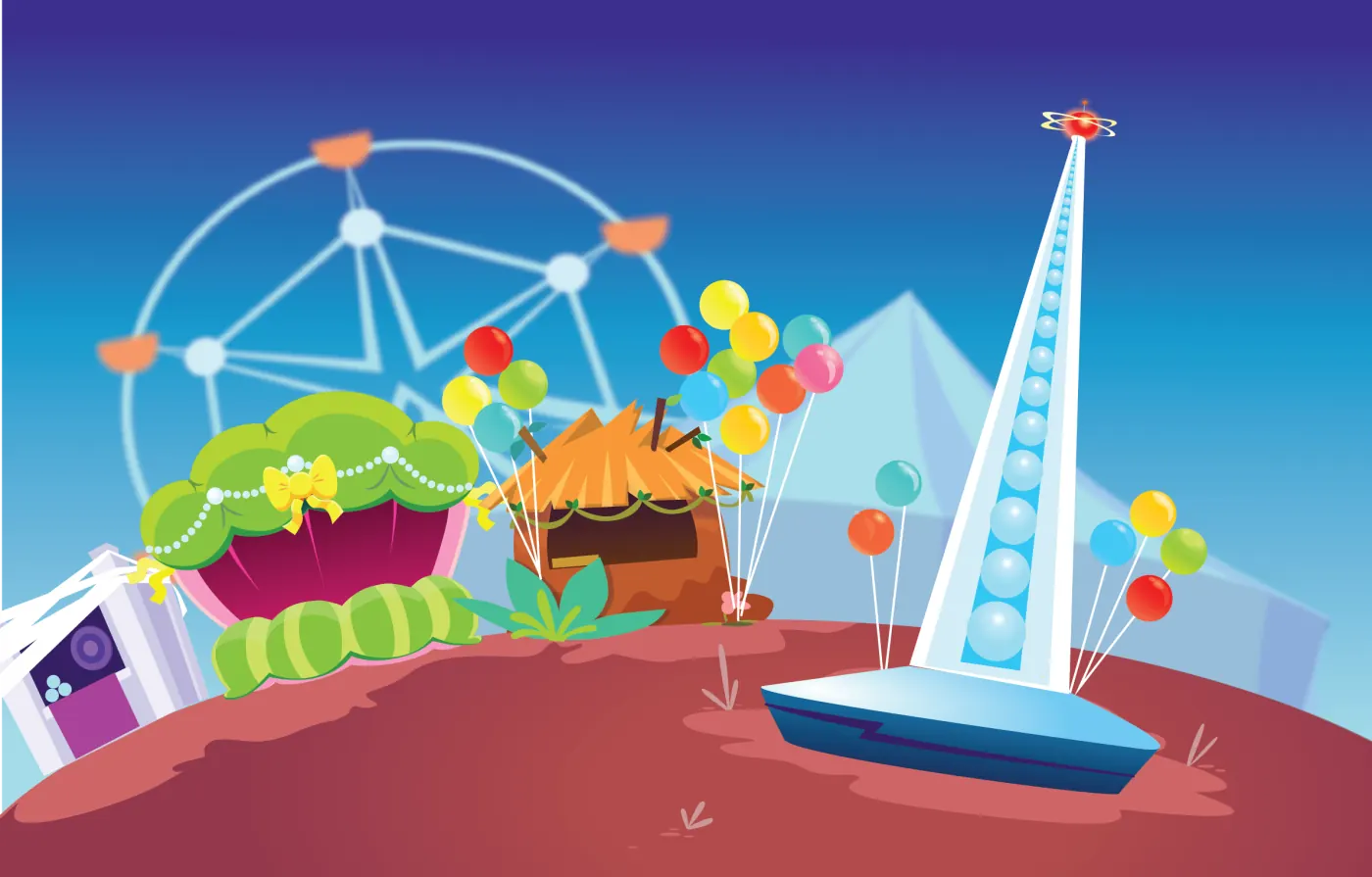
- Ask: What will you do first at the carnival? Who will you take with you?
- Sentence starter: “First, I will …”
- Word bank: fun, ride, big, pop
Funny pictures for writing prompts: what went wrong?
A funny picture gives your child the “what happened” of a story, usually something that went wrong. Each of these shows the mess after the action, so your child tells what happened before it. A silly picture is also the easiest place to start for a child who does not like writing, because nobody can get a silly story wrong.
Picture 9: Olivia’s kitchen
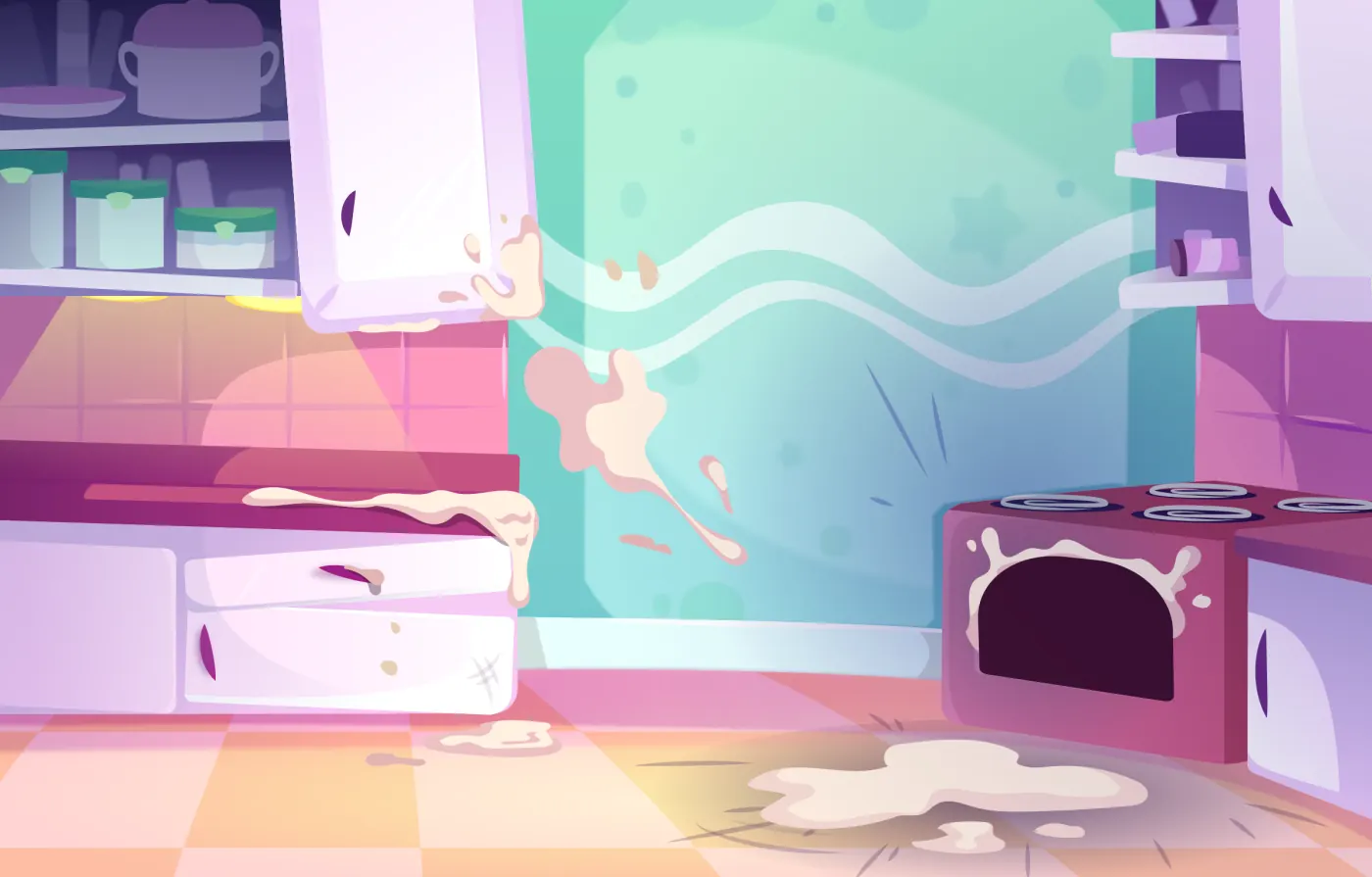
- Ask: Olivia was baking a cake for a party. What went wrong?
- Sentence starter: “Olivia was baking, and then …”
- Word bank: mess, cake, pan, mop
Picture 10: Ari’s machine
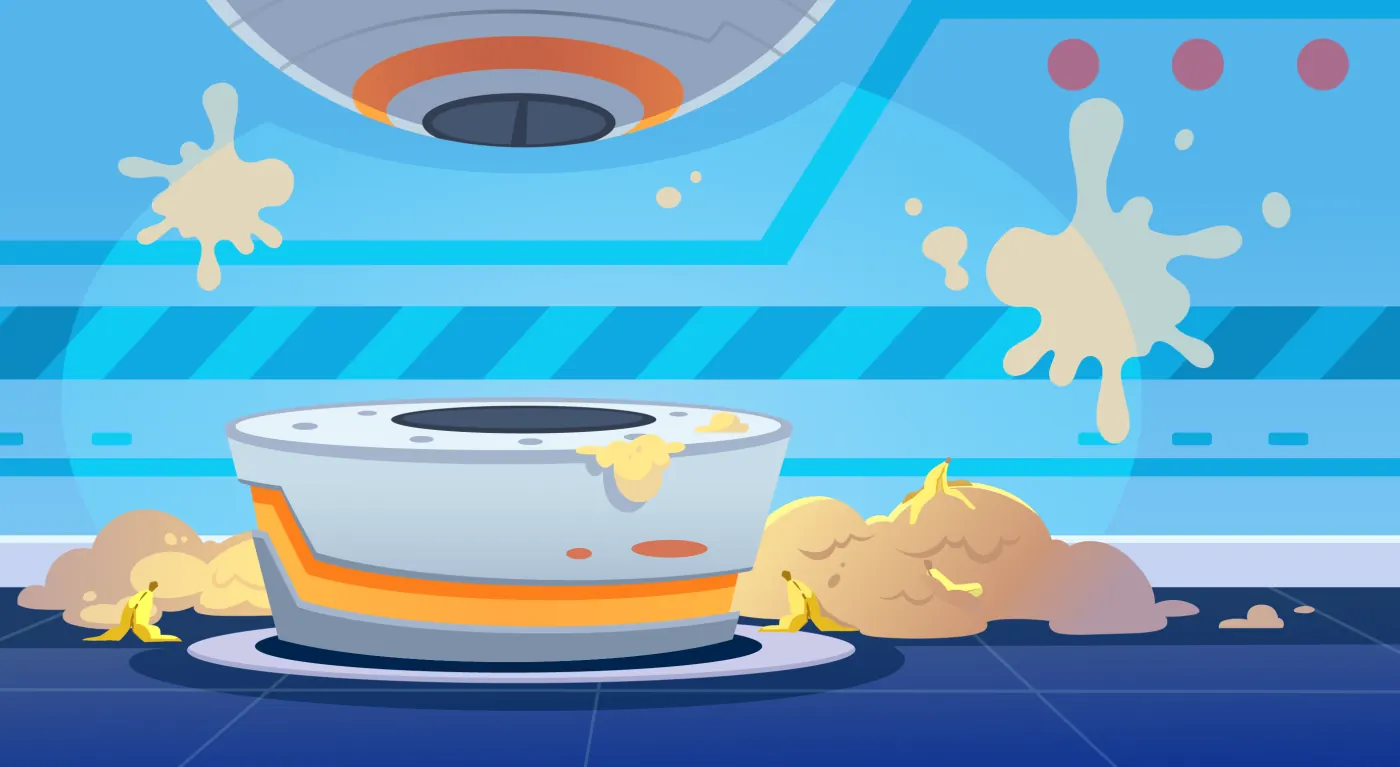
- Ask: Ari built a new machine. What was it for, and what did it do?
- Sentence starter: “Ari pushed the button, and …”
- Word bank: goo, mess, peel, zap
Picture 11: The candy land

- Ask: You can eat one thing here. What do you pick, and what happens when you eat it?
- Sentence starter: “I would eat the …”
- Word bank: yum, big, lick, top
Picture 12: The gingerbread house
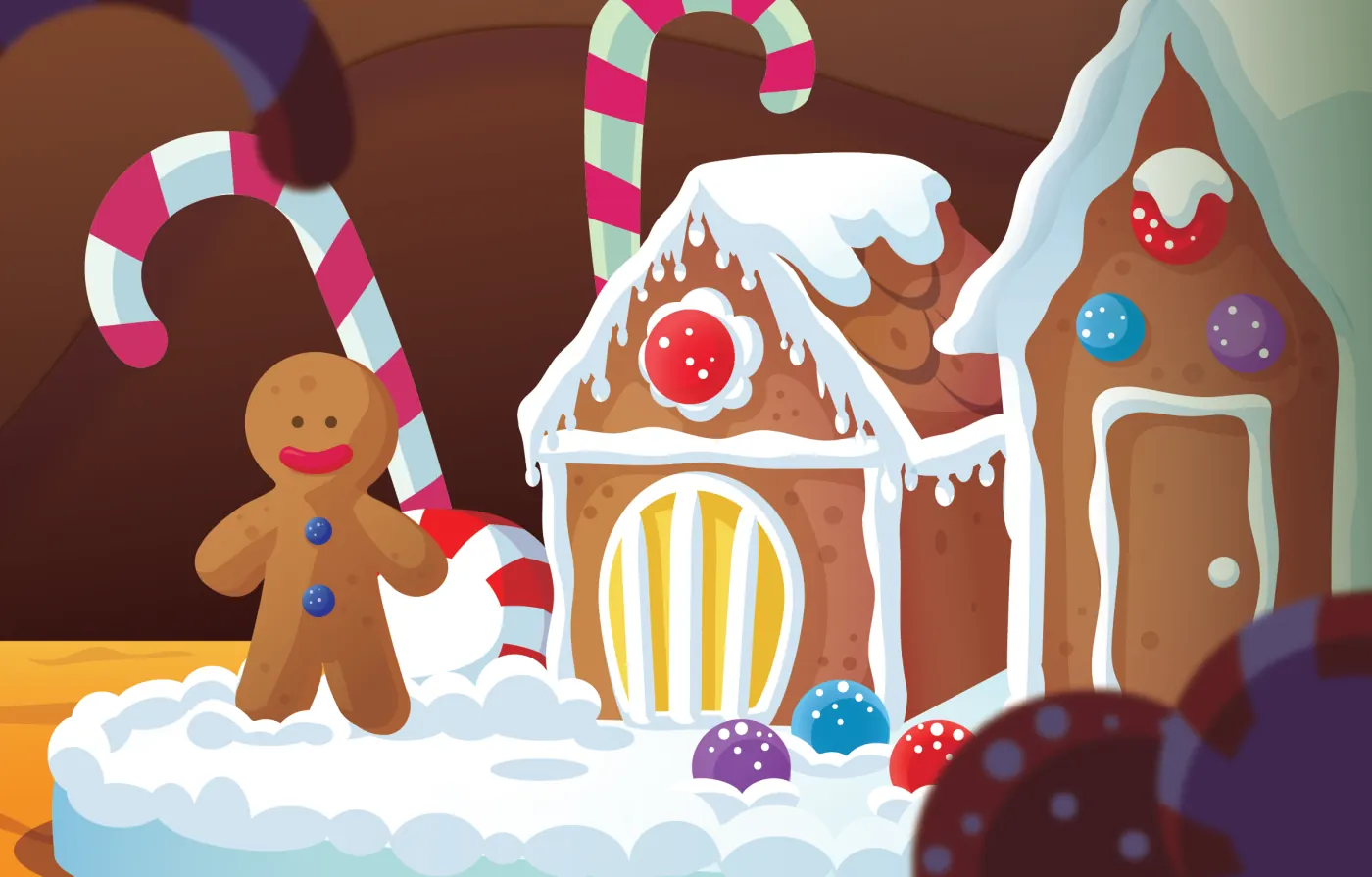
- Ask: The gingerbread man lives here. What does he do all day? Who comes to visit?
- Sentence starter: “The gingerbread man likes to …”
- Word bank: man, run, door, snow
How to use a picture writing prompt: look, talk, then write
Using a picture prompt takes four steps: your child looks and names what is in the picture, talks about what happens, finishes the sentence starter you write, and reads it back. Talking comes before writing because a child who has said the sentence out loud knows what to write. The practice guide on elementary writing from the Institute of Education Sciences, the US Department of Education’s research arm, describes the same order at school: “As students convey their ideas orally, the teacher can put those ideas in writing while explaining sentences”.
Look and name what is in the picture
Let your child look at the picture and point at everything they see. Say the name of each thing as they point. Write three or four of the names at the top of the page as a word bank your child can copy from.
Talk about what is happening
Ask who is in the picture, where they are, and what is happening. Then ask the question that turns a picture into a story: what happens next? Your child answers out loud before anything is written.
Write the sentence starter for them
Write the sentence starter on the top line, saying each word as you write it. Your child finishes the sentence underneath, using the word bank for the hard words. In kindergarten you can write down what your child says and let them write one word themselves.
Read it back
Your child reads the sentence to you, pointing at each word. Let them spell words the way they sound, and praise the idea before anything else. A 2nd grader can add one more sentence that says how someone felt.
The most useful question is “What happens next?” Without it, a child shown a picture tends to write a list: “I see a ship. I see a dog. I see the sea.” Every sentence is true, and none of them tells a story. Asking what happens next, or what happened just before, turns the picture into an event your child can write about.
Let your child spell words the way they sound. Beginning in kindergarten, the same guide advises encouraging children “to invent spellings for words they do not know, or to spell a word phonetically (e.g., wuz for was)”. The word bank covers the hardest words in each picture, and the guide to how kids learn to spell explains why a spelling like “shp” for “ship” is a step forward. For the sentence itself, the guide to teaching a child to write a sentence breaks it into five steps, from saying it out loud to reading it back.
Picture prompts for kindergarten, 1st and 2nd grade
The same picture works from kindergarten to 2nd grade; what changes is how much your child writes about it. The Common Core reading standards ask children in all three grades to use a story’s pictures to understand it, and the writing standards set how much of the answer they write:
| Grade | What your child does with a picture | The reading standard on pictures | What the writing standard asks | A finished page |
|---|---|---|---|---|
| Kindergarten | Names what is in it, says what is happening, writes a word or finishes the starter | ”With prompting and support, describe the relationship between illustrations and the story in which they appear” (RL.K.7) | “Use a combination of drawing, dictating, and writing” (W.K.3) | One sentence, or a word under a drawing of what happens next |
| 1st grade | Writes a few sentences: who, where, and what happened in order | ”Use illustrations and details in a story to describe its characters, setting, or events” (RL.1.7) | Tell “two or more appropriately sequenced events” (W.1.3) | Three or four sentences joined by first, next, and then |
| 2nd grade | Writes a short story that starts at the picture and goes on past it | ”Use information gained from the illustrations and words in a print or digital text” to understand “its characters, setting, or plot” (RL.2.7) | “Include details to describe actions, thoughts, and feelings” (W.2.3) | A short paragraph with a beginning, a middle, an end, and a feeling |
The reading standards are about pictures in books, but the skill is the same one: looking at a picture and saying who, where, and what is happening. Pick the row by what your child can do, not by their school grade. For prompts written as words, the writing prompts for kindergarten, 1st and 2nd grade are set out the same way, grade by grade, each with a sentence starter.
Picture prompts vs word prompts: which to use when
Use a picture prompt when your child says they do not know what to write, and a word prompt when they already have something of their own to say. A word prompt names a topic, such as “Tell about the best day you ever had”, and leaves the child to find the story in their own life. A picture puts the story in front of them.
| Picture prompt | Word prompt | |
|---|---|---|
| What it gives your child | The characters, the place, and something happening | A topic |
| Best for | A child who stalls before the first word; a kindergartner who cannot read a written prompt | A child with a story of their own; writing about their own day, family, or opinions |
| Where the words come from | The picture and its word bank | Your child’s memory |
| What goes wrong | A list of labels (“I see a ship. I see the sea.”) | A blank page |
| The fix | Ask “What happens next?” | Offer two prompts and let your child pick |
Switching between the two keeps writing from becoming a routine. A child who wrote about Olivia’s kitchen on Monday can write about their own kitchen on Tuesday.
Picture prompts for kids who do not like writing
For a child who does not like writing, a picture removes the hardest moment: the blank page with nothing on it to start from. Four things help:
- Let them choose the picture. The Institute of Education Sciences guide says teachers should “include opportunities for students to choose their own topics”. Offer two pictures from this page and let your child pick one.
- Let them say it while you write it. The same guide counts “students dictating ideas to an adult” as writing. Write down what your child says about the picture, then have them copy one sentence.
- Start with a funny picture. Olivia’s messy kitchen and Ari’s goo machine have no wrong answer, and a silly story is easier to start than a true one.
- Make the page smaller. One sentence about one picture is a finished page.
A child who avoids writing because forming the letters is still slow or tiring needs help with the letters first. The guide to letter formation covers how they are taught. If writing stays very hard after weeks of practice, talk to your child’s teacher.
For word prompts, the writing prompts page has its own list of help for kids who do not like writing, with silly prompts to start on.
How to make your own picture writing prompts
Any picture your child cares about can be a writing prompt: a family photo, a page of a picture book, or a drawing they made themselves. The Institute of Education Sciences guide suggests letting children “select a photograph of a vacation, favorite place, or important event and use their writing to dramatize what happened”. Three ways to make one at home:
- A family photo. A birthday, a trip, or the day a pet came home. Ask what happened just before the photo was taken.
- A picture book page. Cover the words with a sticky note, and let your child tell what is happening before you read the page together.
- Your child’s own drawing. The same guide notes that children can plan their writing “by writing words or drawing pictures to represent their ideas”. Your child draws first, then writes a sentence about the drawing.
Write the question and a sentence starter at the top of the page, and three or four words from the picture underneath as the word bank. Those words also make a short spelling list: the guide to teaching spelling at home sets out how to practice one.
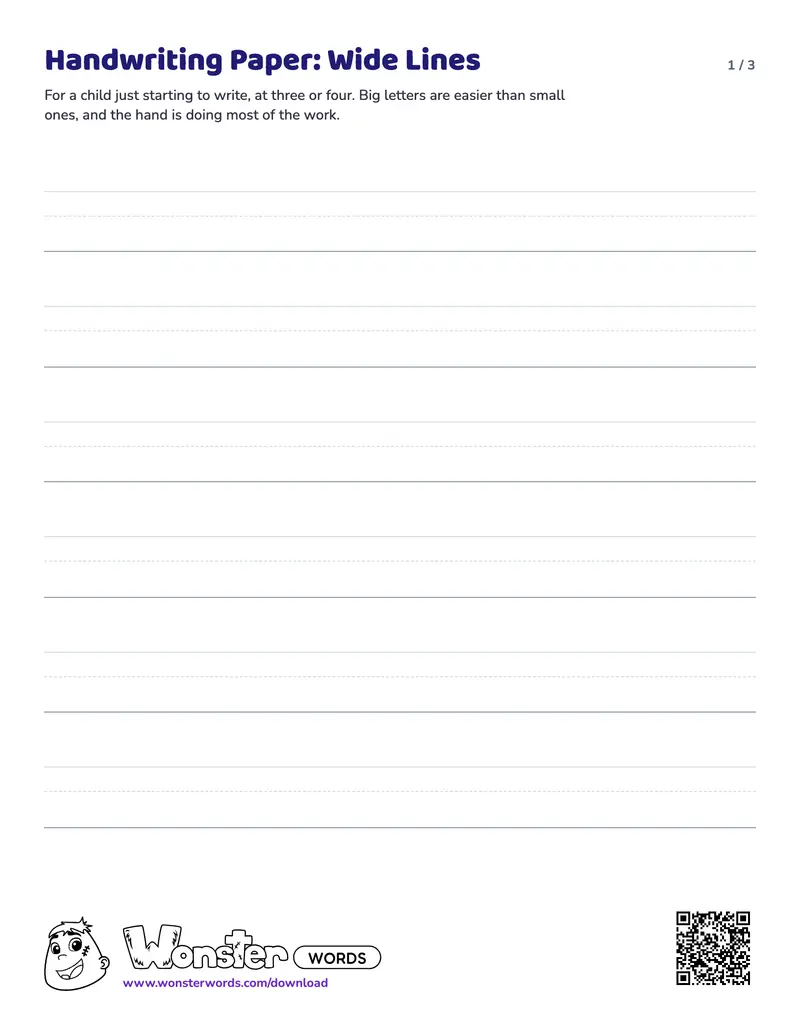
To write the starter in your own hand, print blank handwriting paper. Its third page has a model line at the top of each group for you to write on, with lines underneath for your child.
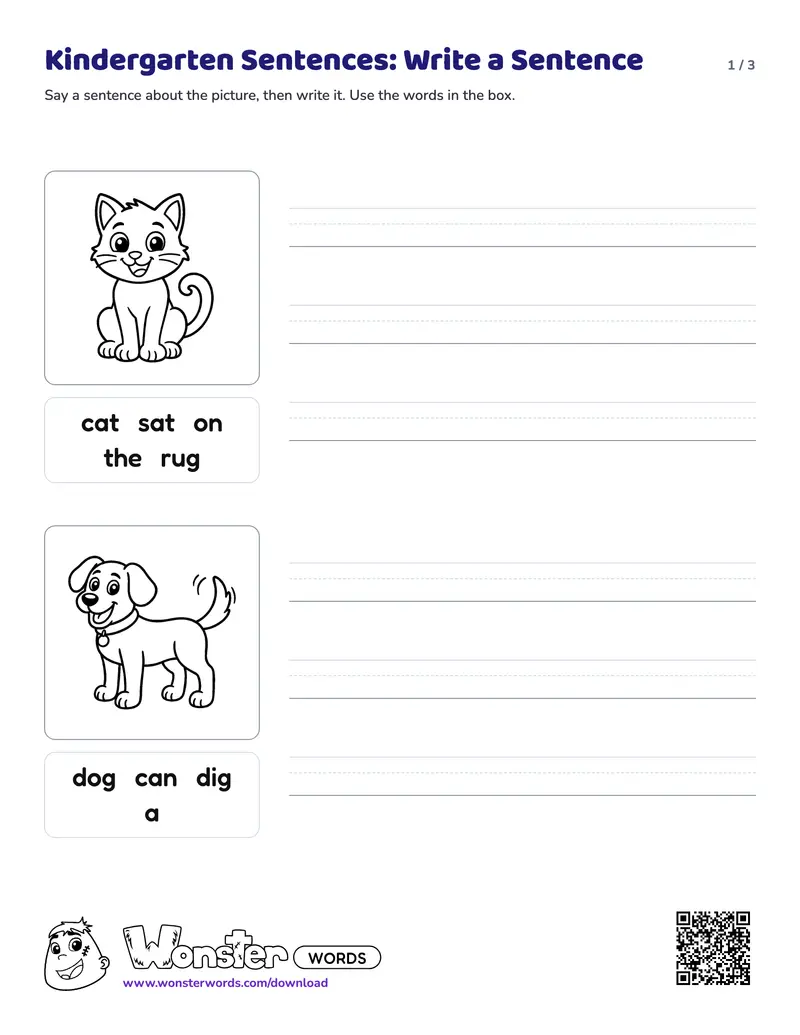
For a kindergartner, a printed picture with its words already in a box is the easiest start. The write a sentence worksheet below, from the kindergarten sentence writing worksheets, has two pictures a page, such as a pig and a hen, each with a word bank under it and lines beside it to write a sentence on. Your child says a sentence about the picture, then writes it. Every word in the word banks is a short vowel word or a sight word, so a kindergartner can read each one.
Free PDF · no sign-up
Feedback?Free printable picture worksheet and handwriting paper
A write a sentence worksheet for kindergarten: a picture, a box of words, and lines for your child to write a sentence about it. Then three pages of primary-ruled handwriting paper with nothing printed on them: wide lines, standard lines, and a page of model lines for you to write the sentence starter on, with lines under each for your child to finish it. No account, no email, no watermark.
- Kindergarten Sentences: Write a Sentence (PDF)6 pictures · 3 pages
Preview page 1Preview
- Handwriting Paper (PDF)23 ruled lines · 3 pages
Preview page 1Preview
Frequently asked questions
What are some effective techniques for using picture writing prompts?
Have your child look at the picture and name what they see, then talk about it before writing anything. Ask who is in the picture, where they are, and what is happening, and then ask what happens next. Write three or four words from the picture as a word bank, and write the first words of the sentence for them to finish. The question about what happens next is the one that matters most, because without it a child tends to list what they see.
Picture prompts vs. text prompts: which is better for writing?
Neither is better for every child. A picture gives a child the characters, the place, and something happening. It suits a child who says they do not know what to write, and a kindergartner who cannot read a written prompt yet. A word prompt, such as tell about your best day, suits a child who already has something of their own to say.
What age groups benefit most from picture writing prompts?
Picture prompts suit every grade from kindergarten to 2nd grade; what changes is how much your child writes. In kindergarten a child talks about the picture and writes a word or one sentence. In 1st grade they write a few sentences that say what happened in order. By 2nd grade they write a short story with a beginning, a middle, and an end, and say how the characters felt.
Can I find picture writing prompts that feature popular children's characters?
Yes. Three of the twelve pictures on this page show Frank, Patti, Wart, Olivia, and Ari, the characters of the Wonster Words reading app: sailing a ship, winning a race, and walking in the autumn woods. Four more show their homes, such as Olivia's kitchen covered in cake batter and the machine Ari built that sprayed goo. Children who play the app already know who the characters are, which gives them more to say.
Are there free resources for printable picture writing prompts?
Every picture on this page is free to use at home, with its question, sentence starter, and word bank. Show your child the picture on a screen, and print the free handwriting paper on this page to write on. Its model lines are for you to write the sentence starter, with lines underneath for your child. For a kindergartner, the free write a sentence worksheet on this page prints a picture of one animal or thing, a box of words, and lines to write on. No account or email is needed.
Does my child need to spell every word correctly when writing about a picture?
No. The Institute of Education Sciences practice guide on elementary writing advises letting children invent spellings from kindergarten, writing a word the way it sounds, such as wuz for was. The word bank gives your child the spelling of the hardest words in the picture. For the rest, let them write the sounds they hear and correct one word at most.
Related guides
Last updated
Looking for something else?
Looking for something else?